US levies 47–69% preliminary duties on Austria, Taiwan, UAE OCTG
The cost of selling oil country tubular goods (OCTG) into the United States jumped this week. On 30 October the Department of Commerce announced preliminary affirmative anti-dumping determinations on OCTG from Austria, Taiwan and the United Arab Emirates, with weighted-average dumping margins of 47.21% to 68.88% (Federal Register/UAE notice; Yieh). When the three notices were published in the Federal Register on 4 November, US Customs and Border Protection began suspending liquidation and collecting cash deposits on covered entries (Federal Register/UAE notice; MESTEEL). For buyers, the trigger is the entry date, not the order date — goods shipped weeks ago now face deposits if they clear customs on or after 4 November.
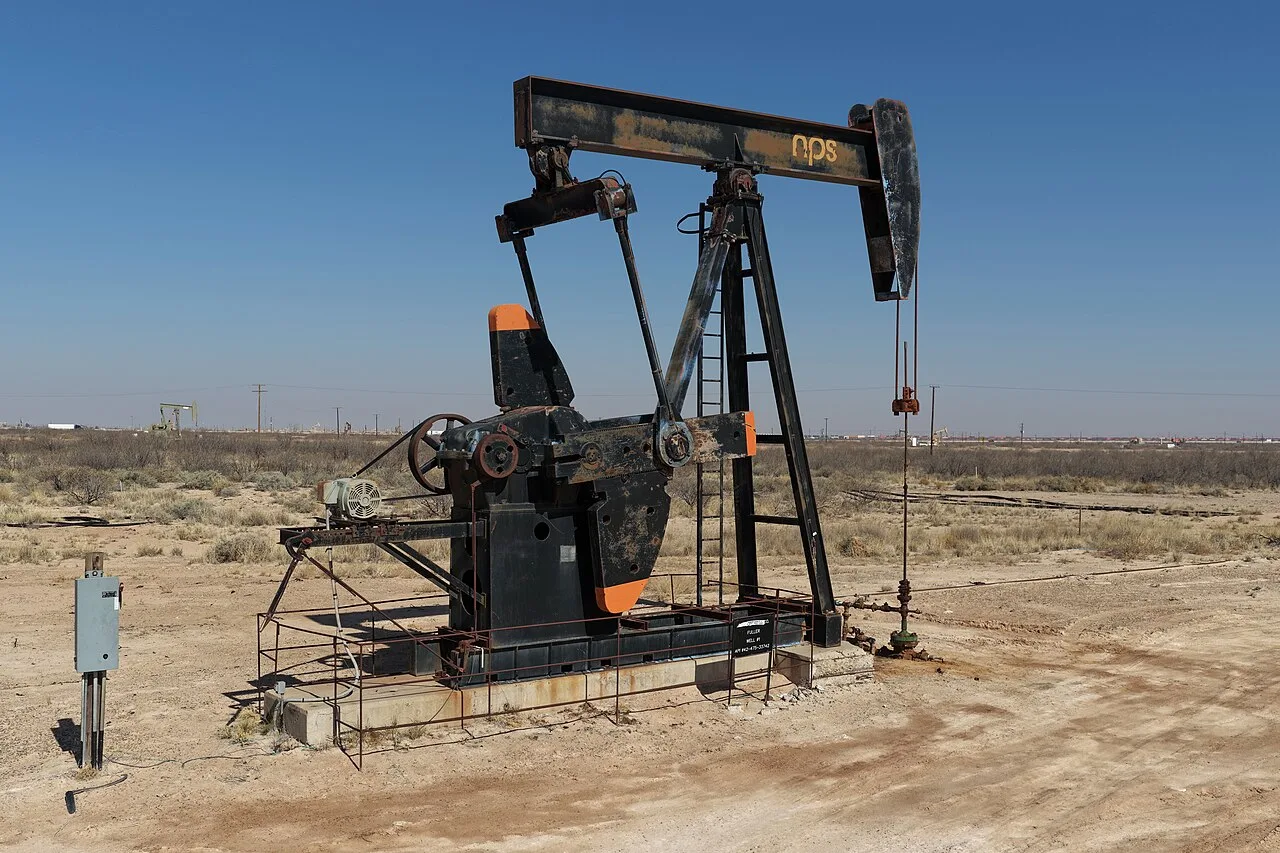
Cover photo: a pumpjack operating in the Permian Basin desert. Credit: Quintin Soloviev (Wikimedia Commons); licence CC BY 4.0; original file page. Resized and converted for this page; file photo shown for illustration and not connected to any named company or project on this page.
What Commerce decided, and when the money moves
Commerce’s notices cover OCTG — casing, tubing and coupling stock in carbon and alloy steel, seamless or welded, API or non-API — entered, or withdrawn from warehouse for consumption, on or after the 4 November publication date. The period of investigation ran from 1 April 2025 to 31 March 2026 (Federal Register/UAE notice). An anti-dumping deposit is provisional: it secures potential duty liability while the investigations continue, and the final rates can move up or down.
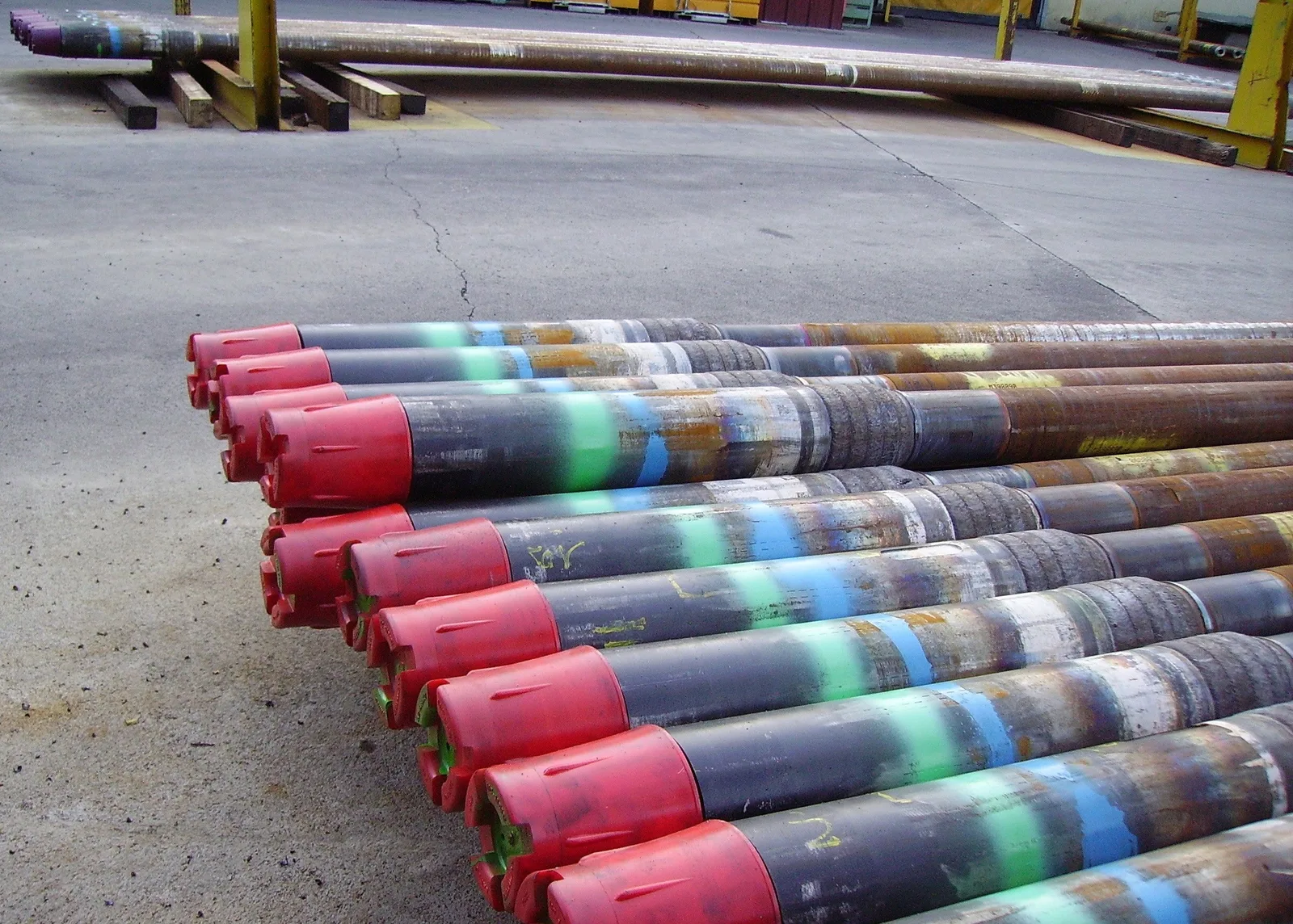
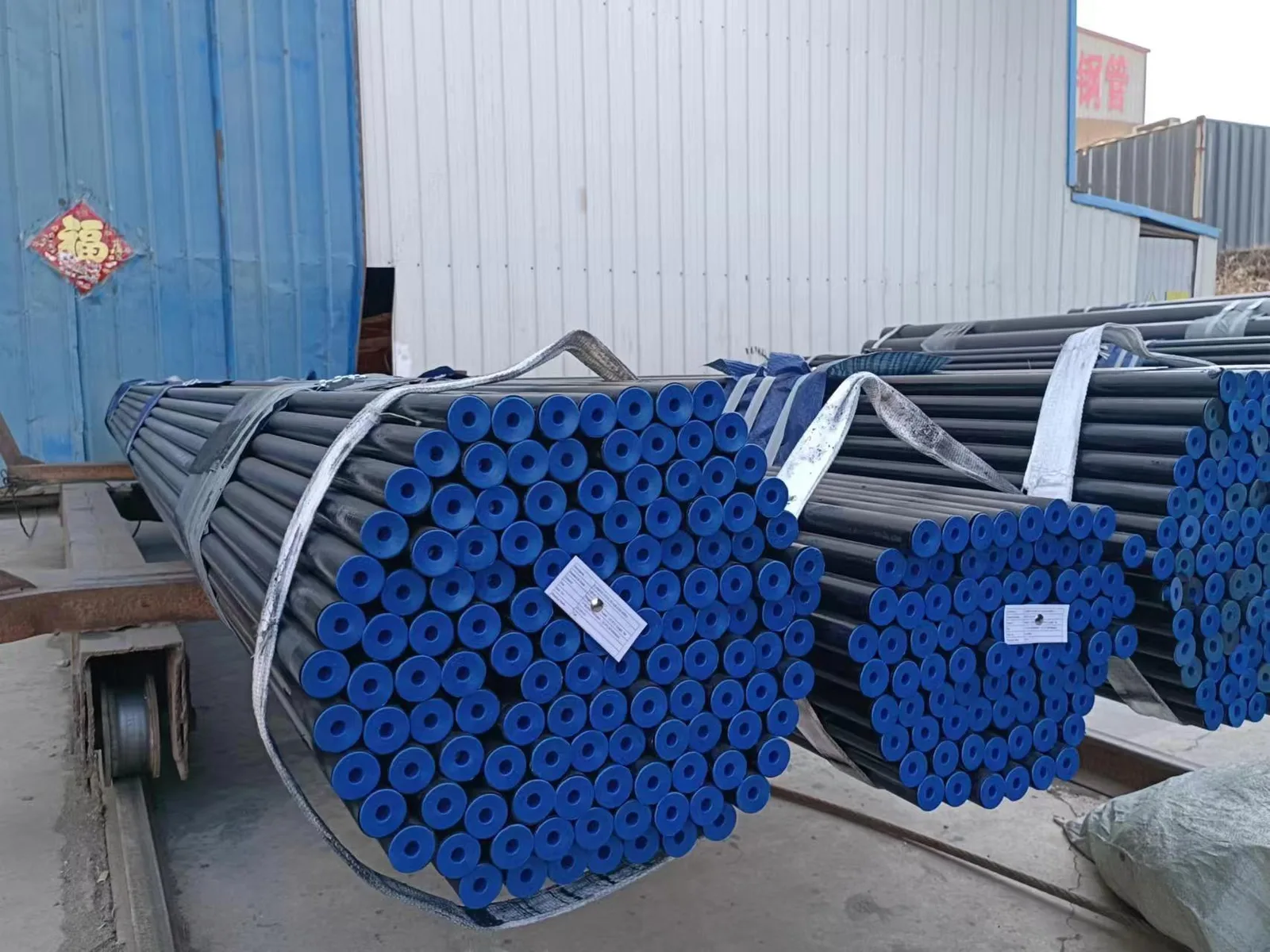
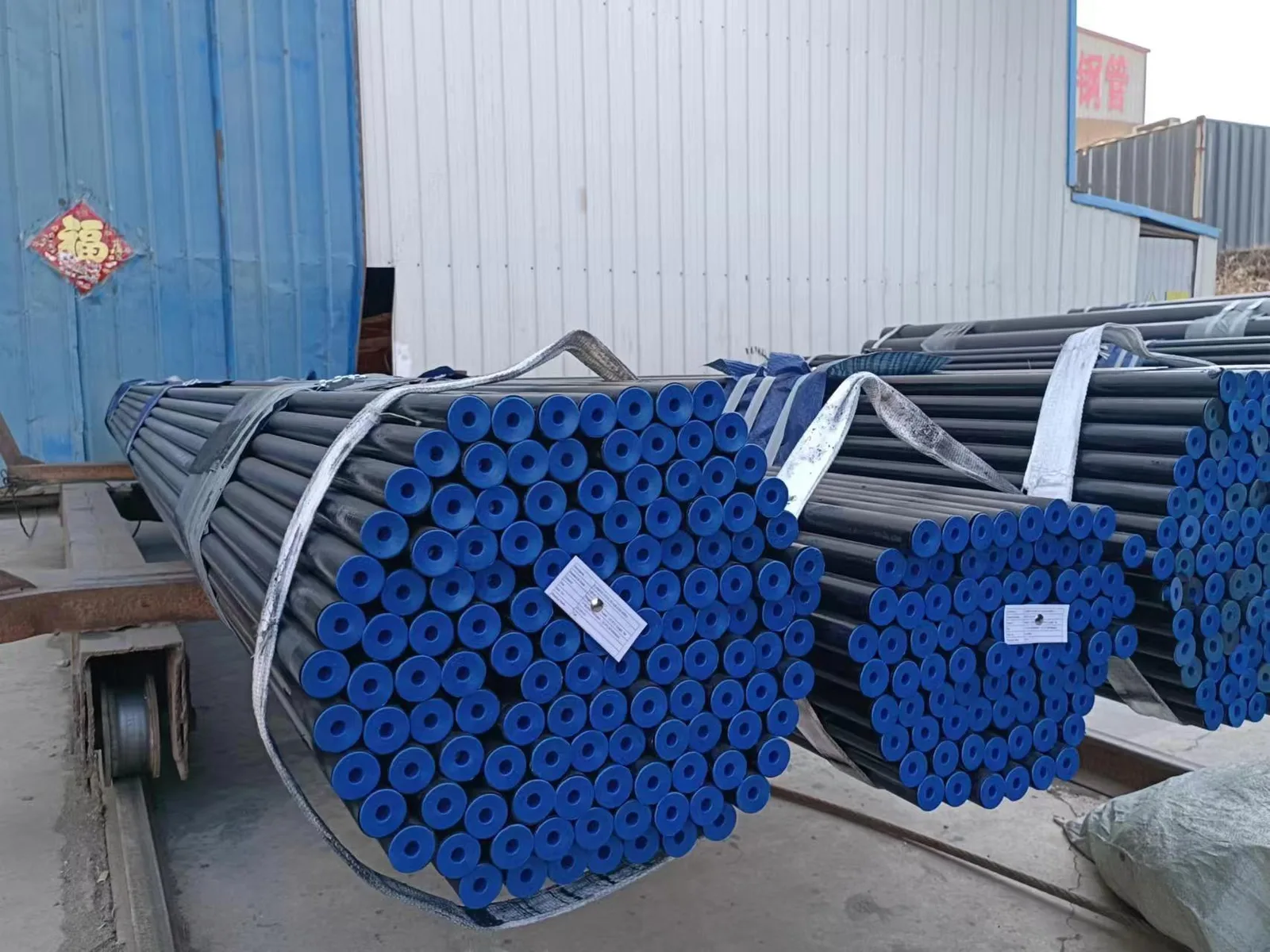
Photo: drill pipes with thread protectors stacked in a pipe yard. Credit: Cjp24 (Wikimedia Commons); licence CC BY-SA 3.0; original file page. Resized and converted for this page; file photo shown to illustrate oil-country tubular goods and not connected to any named company on this page.
The petitions behind the case were filed on 2 April 2026 by the U.S. OCTG Manufacturers Association, United States Steel Corporation and the United Steelworkers (USITC). Commerce published its initiation notice on 28 April (Federal Register/UAE notice); trade press accounts cite 22 April as the initiation date (Yieh) — the 28 April date is the Federal Register publication.
Rates by country: who pays what
- Austria — 47.21%. voestalpine Tubulars GmbH & Co. KG, the only individually examined producer, and all other Austrian exporters share the same rate and deposit rate (Federal Register/Austria notice). At voestalpine’s request, Commerce postponed the final determination to no later than 135 days after publication and extended provisional measures from four to up to six months (SteelOrbis). In the companion countervailing duty case, voestalpine’s preliminary net subsidy rate was set at 10.17% in September (SteelOrbis).
- Taiwan — 51.19% to 54.74%. Shin Yang Steel was assigned 51.19%, Tension Steel Industries 54.74%, and all other Taiwanese producers and exporters 52.43% (Federal Register/Taiwan notice; Yieh).
- UAE — the highest rates. Ajmal Steel Tubes and Pipes Industries received 68.88%; Universal Tube and Pipe Industries FZE and THL Pipe and Tube Industries LLC were preliminarily treated as a single entity at 61.45%; all others 68.23% (Federal Register/UAE notice; MESTEEL).
Final determinations are expected in early 2027 — trade press expects around 20 January for the UAE and late March for Austria and Taiwan (Yieh; Stable Software). Before any duty order can issue, the US International Trade Commission must also reach a final injury determination; it already found a reasonable indication of material injury in May 2026 in investigations 701-TA-791 and 731-TA-1779-1781, which are now in the final phase (USITC; MESTEEL).
What stays out of scope
Importers of specialty oilfield products got one relief: Commerce preliminarily clarified that mechanical pipe for oilfield tools, mechanical pipe for perforating guns, and expandable mechanical pipe are outside the scope of the investigations, consistent with its pending scope inquiry on the Argentina and Mexico OCTG orders (Federal Register/UAE notice; Stable Software). The clarification is preliminary, and oilfield end use alone does not put pipe out of scope — importers claiming the exclusion should keep engineering specifications and mill documentation ready.
A week of tightening pipe trade barriers
The OCTG notices landed in a week when pipe trade walls rose on several fronts. In the EU, the new “other seamless tubes” quota regime that exhausted China’s first-week allocation on 8 October (our 2 November report) drew fresh pressure: importers’ association EURANIMI called on the Commission to raise Ukraine’s annual quota for seamless stainless steel tubes from 6,524 mt to at least 8,400 mt from 2027, claiming Indian importers have exhausted the shared preferential quota on the first day of each quarter since July (SteelOrbis; GMK Center).
Ukraine itself kept adding barriers: according to a 5 November release by law firm Ilyashev & Partners, the Interdepartmental Commission on International Trade decided to keep anti-dumping duties on seamless stainless steel pipes from China at 41.07% for another five years and to terminate the price undertaking of Zhejiang Longda Stainless Steel (Chambers) — a single-source account we flag pending the official publication. And earlier in the week of 20 October, the US kept duties on OCTG from India, South Korea, Turkey, Vietnam and Ukraine after sunset reviews (our 22 October report), while India extended its USD 268/tonne duty on Chinese seamless tubes for five years (our 30 October report). None of this touches China directly in the new OCTG case — China’s own OCTG has faced US duties since 2014 — but each new measure narrows the rerouting options that had kept global OCTG trade flowing.
Tenaris results show why US OCTG is the prize
The market context explains the intensity. Tenaris, one of the petitioners through its US arm, reported third-quarter revenue of $3.10bn on 4 November, up 4% year on year, with North American revenue up 14% to $1.65bn on higher OCTG and line pipe sales; seamless tube volumes held at 780,000 tonnes (Yahoo Finance). The company expects higher North American OCTG demand and prices in the fourth quarter. Deposits of 47–69% on Austrian, Taiwanese and Emirati imports — on top of existing duties on ten other origins — push US OCTG landed costs toward the premium domestic prices that make that outlook work.
What buyers should watch
- Entry dates on in-transit cargo. Deposits apply to entries on or after 4 November 2026 regardless of order or shipping date; review open purchase orders and warehouse withdrawals (Stable Software).
- Scope positioning. Mechanical pipe for oilfield tools, perforating guns and expandable applications is preliminarily out of scope; keep technical records ready (Federal Register/UAE notice).
- Rate allocation. Company-specific rates apply only to the named exporters/producers; documentation mismatches generally fall to the all-others rate.
- Final determinations. Due in early 2027, with the ITC injury votes to follow; case briefs deadlines run from the notices (USITC).
For sourcing outside the covered origins, seamless OCTG and casing remain available from Chinese mills under API 5CT — see our casing and tubing range and how oil and gas pipelines are built for how tubular demand tracks drilling and gathering-line activity.
Sources
- Federal Register, UAE OCTG preliminary affirmative AD determination, 91 FR 69539 (FR Doc 2026-22534), 4 Nov 2026 (via govinfo.gov)
- Federal Register, Taiwan OCTG preliminary affirmative AD determination (FR Doc 2026-22532), 4 Nov 2026 (via govinfo.gov)
- Federal Register, Austria OCTG preliminary affirmative AD determination (FR Doc 2026-22531), 4 Nov 2026 (via govinfo.gov)
- USITC, OCTG from Austria, Taiwan and UAE: determinations (Inv. 701-TA-791, 731-TA-1779-1781), 21 May 2026 (via govinfo.gov)
- Yieh, 2 Nov 2026; MESTEEL, 4 Nov 2026; SteelOrbis, 6 Nov 2026
- Stable Software, 3 Nov 2026; Yahoo Finance, 5 Nov 2026
- SteelOrbis, EURANIMI, 5 Nov 2026; GMK Center, 5 Nov 2026; Chambers/Ilyashev & Partners, 5 Nov 2026