US Continues OCTG Duties as Canada Splits Its Order and Lifts Ukraine
The week ending 23 October 2026 produced two separate North American trade decisions on oil country tubular goods, and neither opened a new case. In the United States the Department of Commerce published a continuation notice for antidumping and countervailing duty orders that date back to 2014, applicable from 29 September 2026. In Canada the International Trade Tribunal closed an expiry review on 7 October 2026 by keeping its order for seven origins and rescinding it for Ukraine. This Friday review sets out what each record says and cross-references the other trade measures and price signals this run covered during the week.
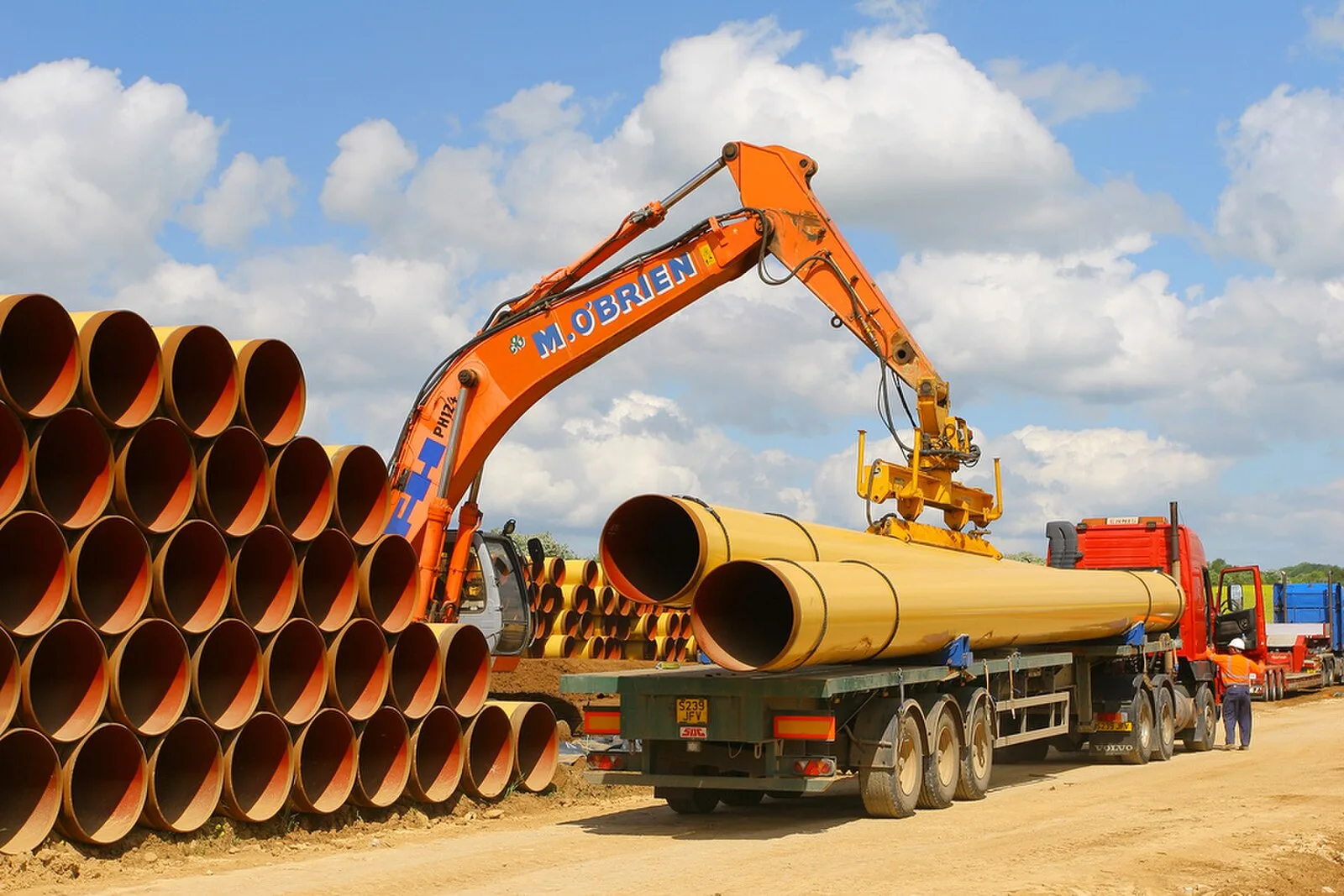
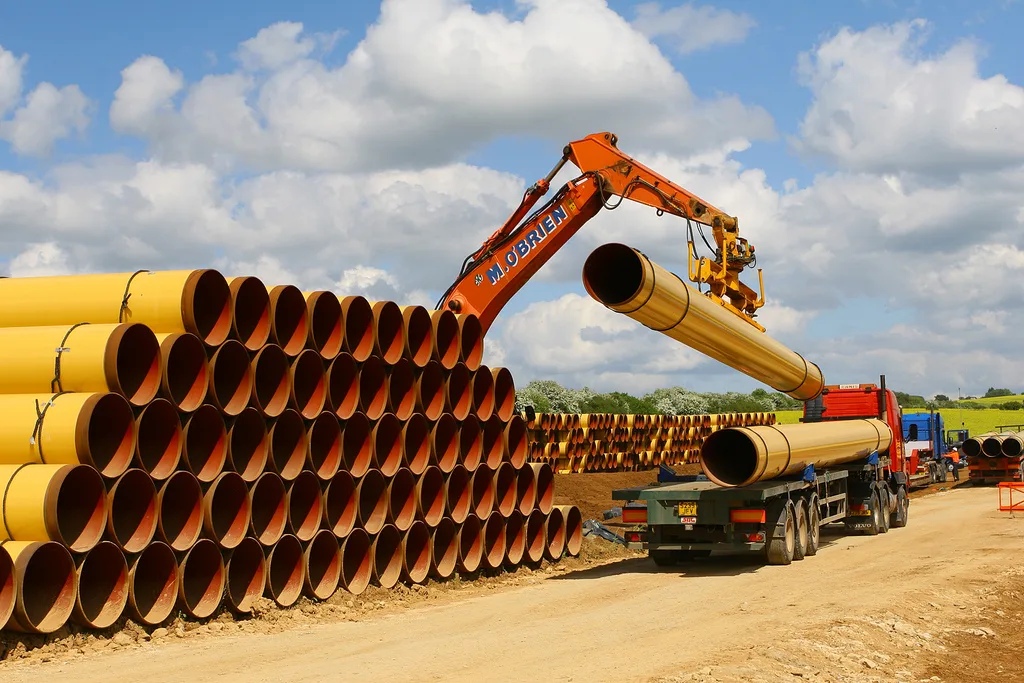
Cover photo: coated steel pipe strung out in a pipeline construction yard, resized and converted for this page. Credit: PROJECT_MANAGER (Wikimedia Commons); licence CC BY-SA 2.0; original file page. The Commons description places it on the Wormington to Sapperton gas pipeline in Gloucestershire, England. It is illustrative and is not connected to any party named here.
The US notice: same orders, five countries, one date
The Federal Register notice of 22 October 2026 (91 FR 66681) states that, because Commerce and the International Trade Commission both determined that revocation of the antidumping and countervailing duty orders on certain OCTG from India, Korea, Türkiye, Vietnam and Ukraine would likely lead to continuation or recurrence of dumping, countervailable subsidies and material injury, Commerce is publishing a notice of continuation. The DATES line reads applicable 29 September 2026, so the effect is retroactive to that date rather than starting on publication day.
The background section restates where the orders came from: AD orders on India, Korea, Türkiye and Vietnam published on 10 September 2014, CVD orders on India and Türkiye published the same day, and the Ukraine order published on 16 July 2019 after the suspension agreement was terminated. This was the second sunset review of those orders, instituted by the ITC and initiated by Commerce on 1 July 2025.
No new duty rate is created by a continuation notice. Cash deposit rates and assessment rates stay as they were under the existing orders, and importers who were already posting deposits keep doing so. The practical consequence is that expectations of relief were closed off, not that costs rose this week.
What the orders physically cover
Scope is where mistakes cost money. The same notice states that the scope also covers OCTG coupling stock, and names four exclusions: casing or tubing containing 10.5 percent or more by weight of chromium, drill pipe, unattached couplings, and unattached thread protectors. Subject merchandise is classified in HTSUS subheadings running through 7304.29, 7305.20 and 7306.29, with the notice warning that other item numbers may also be used.
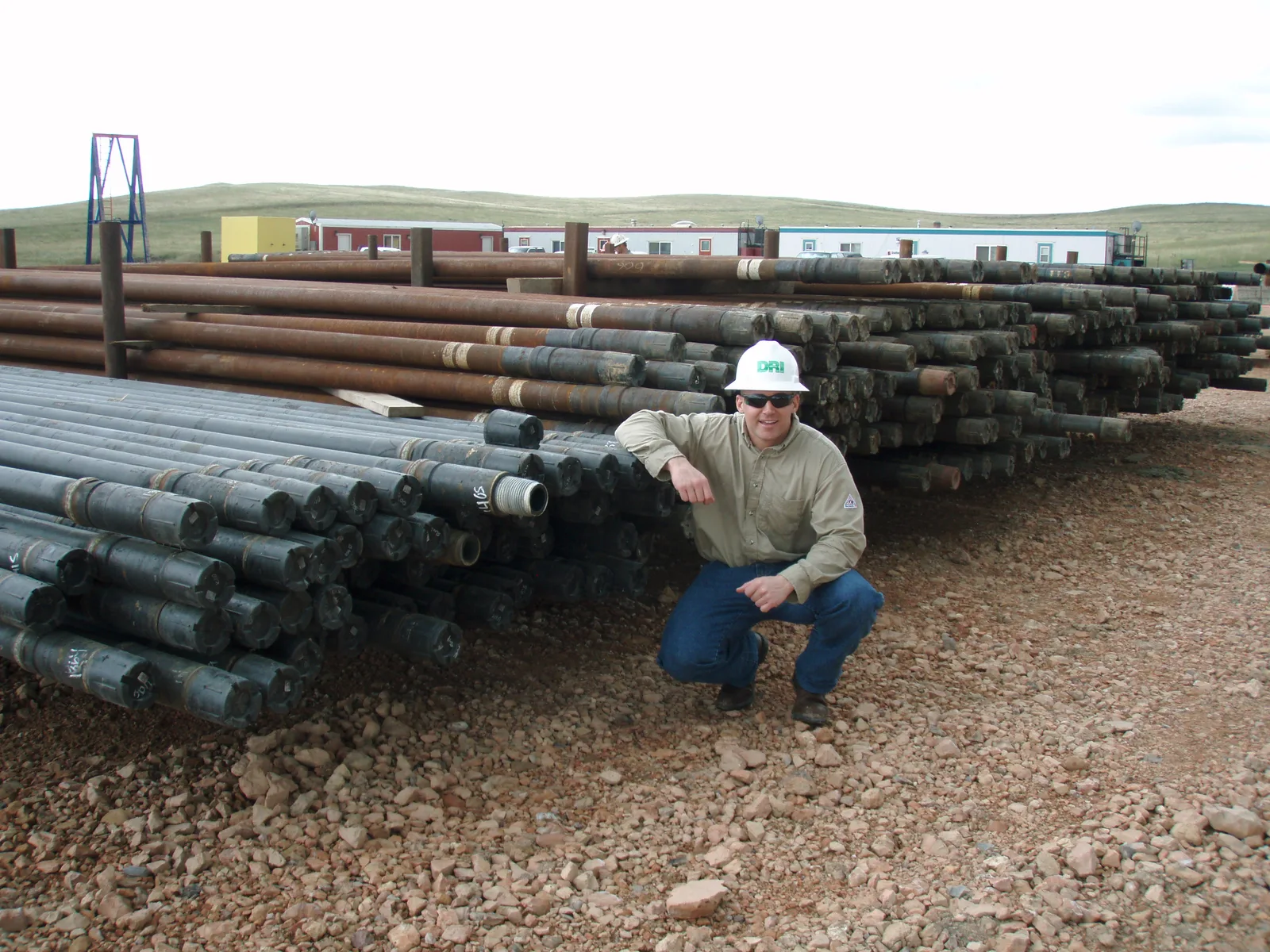
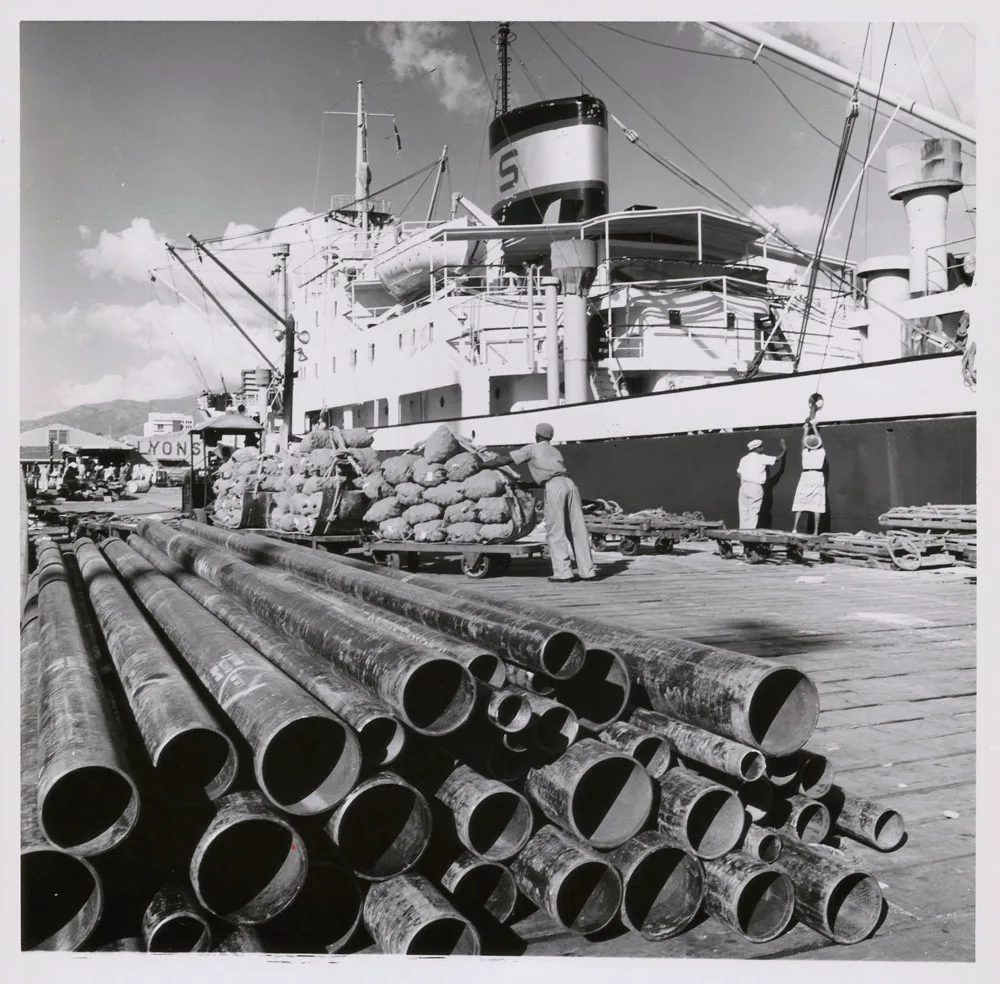
Image: used drill pipe, resized and converted for this page. Credit: Joshua Doubek (Wikimedia Commons); licence CC BY-SA 3.0; original file page. Drill pipe is explicitly excluded from the scope of the US OCTG orders discussed above, which is why the photograph illustrates adjacent product rather than covered merchandise.
The determination behind it
The second record is separate in publisher and in date. The ITC determination notice, published in the Federal Register on 29 September 2026, records that the Commission determined revocation of the CVD orders on OCTG from India and Turkey and the AD orders on India, South Korea, Turkey, Ukraine and Vietnam would be likely to lead to continuation or recurrence of material injury within a reasonably foreseeable time. A footnote to that determination records Commissioner Jason E. Kearns voting in the negative with respect to the AD order on Ukraine, and Commissioner Samuael T. Negatu not participating.
The Tribunal proceeded on the standard sunset question, which is what would happen if the orders went away, not whether they were justified when imposed. Buyers reading a continuation as a judgment that today’s shipments are dumped misread the record.
Canada: seven origins covered, Ukraine off the list
The Canadian International Trade Tribunal press release of 7 October 2026 records that, further to expiry review RR-2025-006, the Tribunal continued its order made on 30 December 2020 in RR-2019-006 for goods from Chinese Taipei, India, Indonesia, South Korea, Thailand, Türkiye and Vietnam, except goods exported from Korea by Hyundai Steel Company and goods exported from Türkiye by Borusan Mannesmann Boru Sanayi ve Ticaret A.Ş., and rescinded its order concerning OCTG from Ukraine. It found that expiry would likely result in injury for the continued origins and would not likely result in injury for imports from Ukraine, and the Canada Border Services Agency therefore continues to impose anti-dumping duties.
Trade press picked the decision up at the end of the week rather than the day it was issued. SteelOrbis reported on 21 October that the current antidumping duty on OCTG from those countries is 37.4 percent of the export price for exporters that have not been issued specific normal values, and listed HS numbers beginning 7304.29.00.12. GMK Center followed on 22 October, citing SteelOrbis, and added that average North American OCTG prices on FOB terms rose 17 percent month on month, or 441 dollars, to 3,031 dollars per tonne in September.
Those two trade-press items state in their own text that one reports the other, so they count as one independent source rather than two. Together with the Tribunal record, the Canadian decision therefore rests on two independent groups with one first-hand one.
Ukrainian OCTG entering Canada is now outside an anti-dumping order. A rescission is not an import licence, though: the goods still have to meet the buyer’s specification and mill certification requirements, and whether Ukrainian mills can ship regularly at this stage is a commercial question the Tribunal did not address.
The rest of the week, in one place
Three other things this run covered belong in the same weekly picture, and none of them is new today:
- On 20 October the USITC instituted investigations 701-TA-810 and 731-TA-1811-1812 into seamless standard, line and pressure pipe from Georgia and India, with a preliminary determination due by 30 November 2026. OCTG sits outside that scope, so it is a parallel proceeding rather than a second front of this one. See Why the USITC opened seamless pipe investigations on India and Georgia.
- Korea’s Trade Commission opened a case on Chinese seamless pipe on 8 October, case 23-2026-9, with a preliminary determination expected within three months of initiation unless extended. See Korea opens anti-dumping probe into Chinese seamless pipe.
- Demand did not stop for the trade cases. APA Group took a final investment decision on 22 October to build the Bulloo Interlink Pipeline, committing 700 million Australian dollars, and Vallourec announced on 12 October that TotalEnergies awarded it a contract covering more than 16,000 tonnes of tubular products, including OCTG with premium connections, plus around 159 km of coated line pipe for Absheron. See APA commits to the Bulloo Interlink Pipeline.
On the Chinese side, September exports provide the supply-side counterweight. Mysteel, citing customs data, put September seamless pipe exports at 572,500 tonnes, up 6.61 percent month on month, with January to September at 4.5388 million tonnes, while the national average price of 108 × 4.5 mm seamless pipe eased 2 yuan to 4,245 yuan per tonne on 22 October. Both figures are trade-press readings attributed to their sources, not government pages this run could reach.
What changes for sourcing in November
Three checks are worth doing this week, and none requires guessing where a rate goes next.
First, match every open OCTG line to origin and exporter before quoting a landed cost. The Canadian outcome depends on the exporter: Hyundai Steel and Borusan Mannesmann exclusions survive the continuation, and Ukrainian goods leave the order entirely, while other exporters at the same origin do not.
Second, re-read the scope before classifying goods. The US orders exclude drill pipe, unattached couplings and thread protectors and any casing or tubing at 10.5 percent chromium or more, and they cover coupling stock. A tariff heading alone does not settle the question, so keep the mill certificate and the specification next to the customs entry.
Third, separate the new proceeding from the old orders when planning Indian supply. The 20 October institution covers seamless standard, line and pressure pipe, not OCTG, so an Indian OCTG order is exposed to the continuing 2014 orders and not to 701-TA-810.
Background reading for the product side is available on Xbang’s API 5CT casing and tubing page, alongside seamless steel pipe for oil and gas pipelines and the API 5L line pipe guide. Nothing here is legal advice: entry classification and duty treatment should be confirmed against the notices cited above and, where exposure is material, with a customs specialist.
Sources
- Federal Register 91 FR 66681 — Certain Oil Country Tubular Goods From India, Korea, Türkiye, Vietnam, and Ukraine: Continuation of AD and CVD Orders
- USITC — Oil Country Tubular Goods From India, South Korea, Turkey, Ukraine, and Vietnam; Determinations (FR Doc. 2026-19879)
- Canadian International Trade Tribunal — Tribunal continues order in part: oil country tubular goods
- SteelOrbis — Canada extends AD duties on OCTG imports from seven countries, revokes duty on Ukraine
- GMK Center — Canada has lifted anti-dumping duties on imports of pipe products from Ukraine
- Federal Register 91 FR 66358 — Institution of investigations Nos. 701-TA-810 and 731-TA-1811-1812 (Preliminary)
- MOFCOM China Trade Remedy Information Network — Korea opens anti-dumping investigation into Chinese seamless pipe
- APA Group — APA to progress Bulloo Interlink Pipeline supported by agreement with Origin Energy
- Vallourec — press release on the TotalEnergies Absheron award (PDF)
- Mysteel — China exported 572,500 tonnes of seamless pipe in September
- Mysteel daily — national 108 × 4.5 mm seamless pipe average price, 22 October 2026