US Rig Count Steady as Kinder Morgan Sanctions 904 Miles of Pipe
The last 48 hours brought three dated signals for tubular demand rather than a new trade action. The Baker Hughes count held at 603 active US rigs for the week ending 23 October, Brent crude settled at $115.81 a barrel on 26 October after a 6% weekly advance, and Kinder Morgan recorded final investment decisions on two US gas pipelines worth about $4.7 billion to its own share. Together they describe a market where drilling activity is stable rather than rising while long-cycle pipe demand is being underwritten several years ahead.
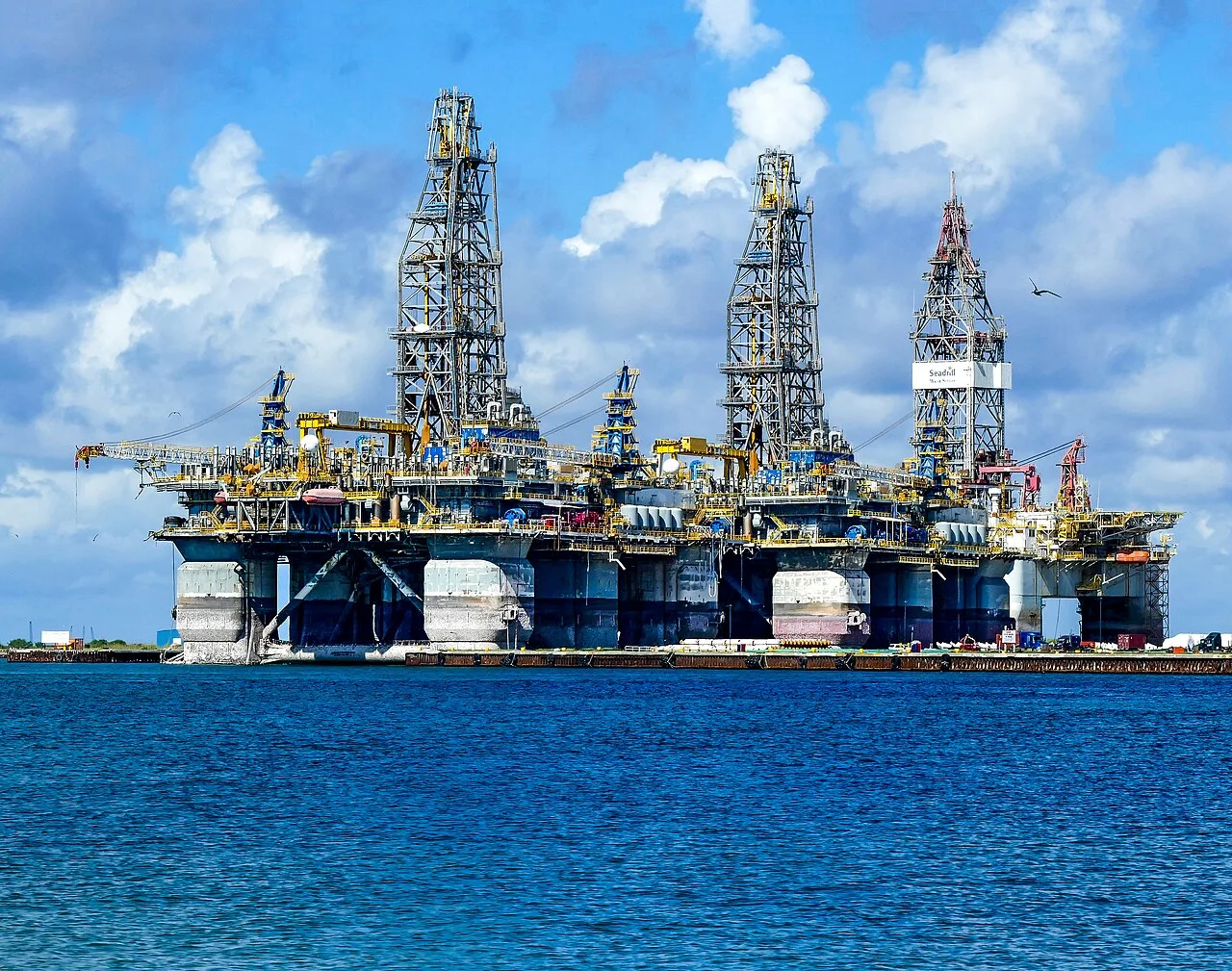
Cover photo: drilling rig refurbishment platform in Corpus Christi Bay, Texas. Credit: Jim Evans (via Wikimedia Commons), CC BY-SA 4.0, File:Refurbishment Platform for Drilling Rigs – Corpus Christi.jpg; licence CC BY-SA 4.0; original file page. Illustrative photo, not connected to any company named below.
Rig count: flat at 603, and higher than a year ago
The headline number for OCTG buyers is stability. Reporting the Baker Hughes weekly count on 26 October, ENGINE wrote that “the total number of rigs drilling for crude oil and natural gas in the US remained unchanged at 603 in the week ending 23 October, according to Baker Hughes.” Within that total, oil rigs rose by one to 460 while gas rigs fell by one to 132, with 11 rigs classed as miscellaneous. The same report put the total 53 rigs, or 9.6%, above the equivalent week a year earlier.
World Oil Monitor’s compilation of the same count gives the regional breakdown: Texas accounted for 277 rigs, New Mexico 98 and Oklahoma 50, with the Permian Basin alone holding 272. Canadian activity stood at 220 rigs. Valor’s weekly energy bulletin reported the identical headline figures: “Baker Hughes reported the U.S. active rig count holding flat at 603, with oil rigs up by one to 460 and gas rigs down by one to 132.”
The practical reading is that operators are holding the line rather than adding rigs. A count that is flat week-on-week but almost 10% above last year means casing and tubing consumption continues at an established rate; it does not, on its own, signal incremental tendering.
Oil price: six-month highs, then a diplomatic pullback
Brent finished 26 October at $115.81 a barrel, down 91 cents or 0.8% on the day, while WTI settled at $101.76, down $1.51 or 1.46%. Both benchmarks had gained strongly on the previous Friday, with Brent settling more than $3 higher for a weekly gain of 6% and WTI up 2.3% for the week, leaving prices near six-month highs.
The drivers named in the report were unchanged on both sides of the risk: Yemen’s Houthi movement said it had struck pumping stations on Saudi Arabia’s East-West crude pipeline and Riyadh airport over the weekend, while Qatari mediators travelled to Tehran and officials from Saudi Arabia, Turkey and Pakistan met Iranian counterparts. US benchmark figures from another source differ by basis rather than direction: Valor noted that “Brent crude climbed past $116 per barrel and WTI settled above $103, driven by mounting Middle East security risks and shipping disruptions.”
Official series corroborate the level. The US Energy Information Administration’s spot-price release of 21 October shows Europe Brent spot at $118.82 on 19 October and $115.22 on 20 October, its latest published days, with Cushing WTI spot at $110.01 and $107.89 on the same two days. Note that other data vendors quoted different intraday or settlement levels for 26 October; this article uses the Reuters settlements and the EIA spot series, which are not directly comparable in basis.
For buyers, the useful point is that a 6% weekly move in crude changes exploration economics at the margin without yet moving rigs. Higher prices support activity levels already budgeted for rather than triggering new drilling programmes within the quarter.
Long-cycle demand: 904 miles of sanctioned gas pipeline
The clearest new physical demand comes from the midstream side. Kinder Morgan’s own project page states that “Natural Gas Pipeline Company of America LLC (NGPL) has reached a final investment decision to proceed with its Permian Link Project,” a roughly $4.2 billion scheme with a KMI share of about $1.6 billion, approximately 434 miles of new pipeline and 2.8 Bcf/d of capacity, targeted for service in the third quarter of 2030.
Enerdata, citing the company’s 21 October announcement, puts the combined KMI share of the two joint-venture projects at $4.7 billion: alongside Permian Link, Southern Natural Gas will build the Southeast Connector, about 470 miles carrying up to 2.6 Bcf/d, with KMI’s share around $3.1 billion and phased in-service from the fourth quarter of 2030. Trade coverage describes the pair as roughly 904 miles of new pipe between them, each backed by long-term take-or-pay transportation agreements.
Inspectioneering reported the company’s third-quarter results in the same release window: a project backlog of $14.4 billion including $13.2 billion of natural gas projects, net income attributable to KMI of $764 million and adjusted EBITDA up 9% to $2.18 billion.
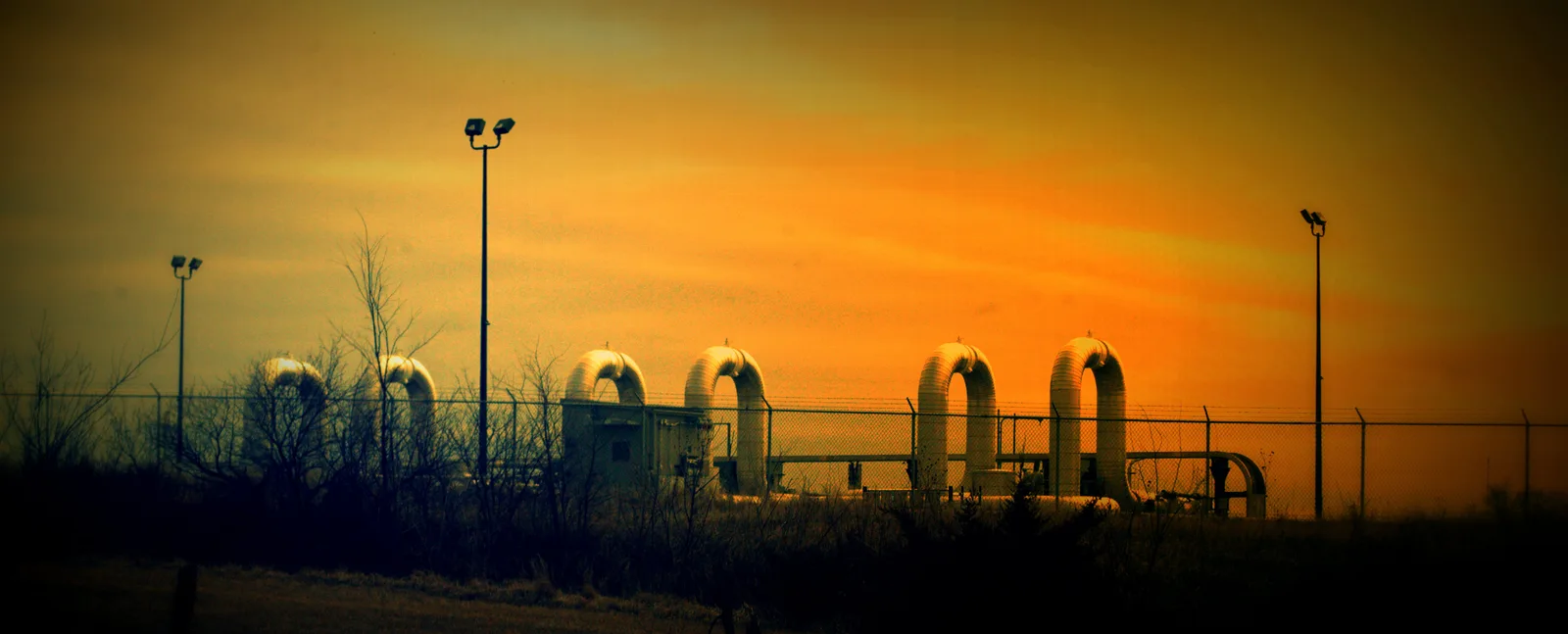
Photo: pumping station on the TransCanada Keystone crude pipeline system in rural Nebraska (2013), shown to illustrate long-distance pipeline infrastructure, not a gas transmission construction site. Credit: shannonpatrick17 (via Wikimedia Commons), CC BY 2.0, File:Trans Canada Keystone Oil Pipeline (8480337530).jpg; licence CC BY 2.0; original file page.
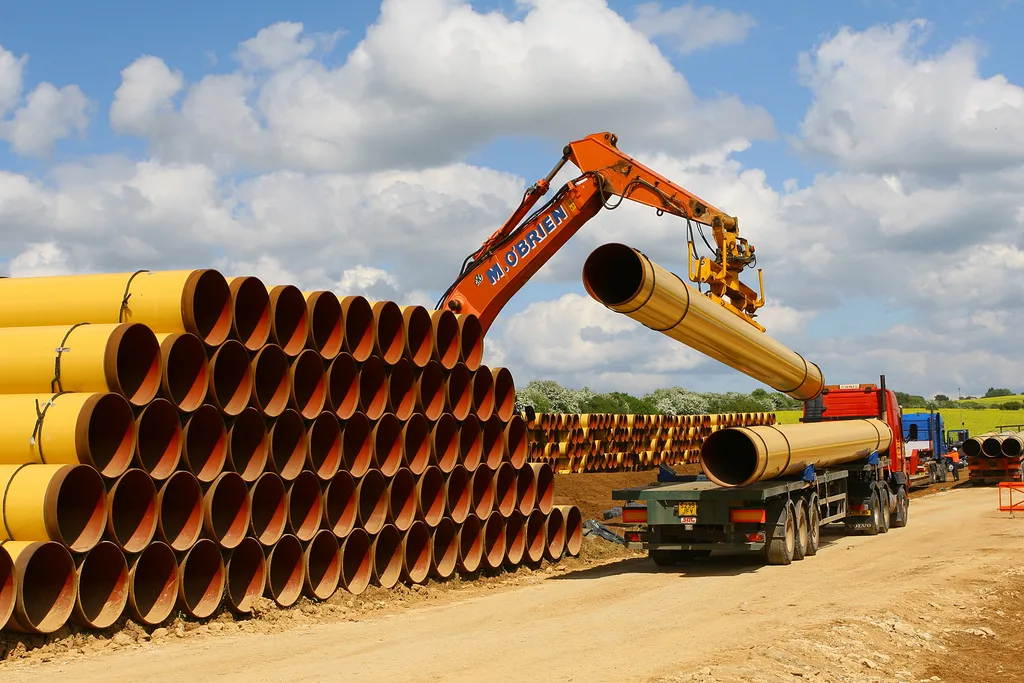
Two things matter for pipe suppliers here. First, these schemes are usually executed under long-lead procurement models, so mills and coating yards see enquiries well before pipe is laid - 2030 in-service dates already shape 2027 qualification schedules. Second, the demand is gas transmission. That favours large-diameter line pipe to API 5L rather than the seamless OCTG used in well construction, though high-pressure facilities, compressor station piping and crossings still draw on ASTM A106 carbon steel pipe and higher-specification seamless products.
China: prices keep edging lower as stocks stay with mills
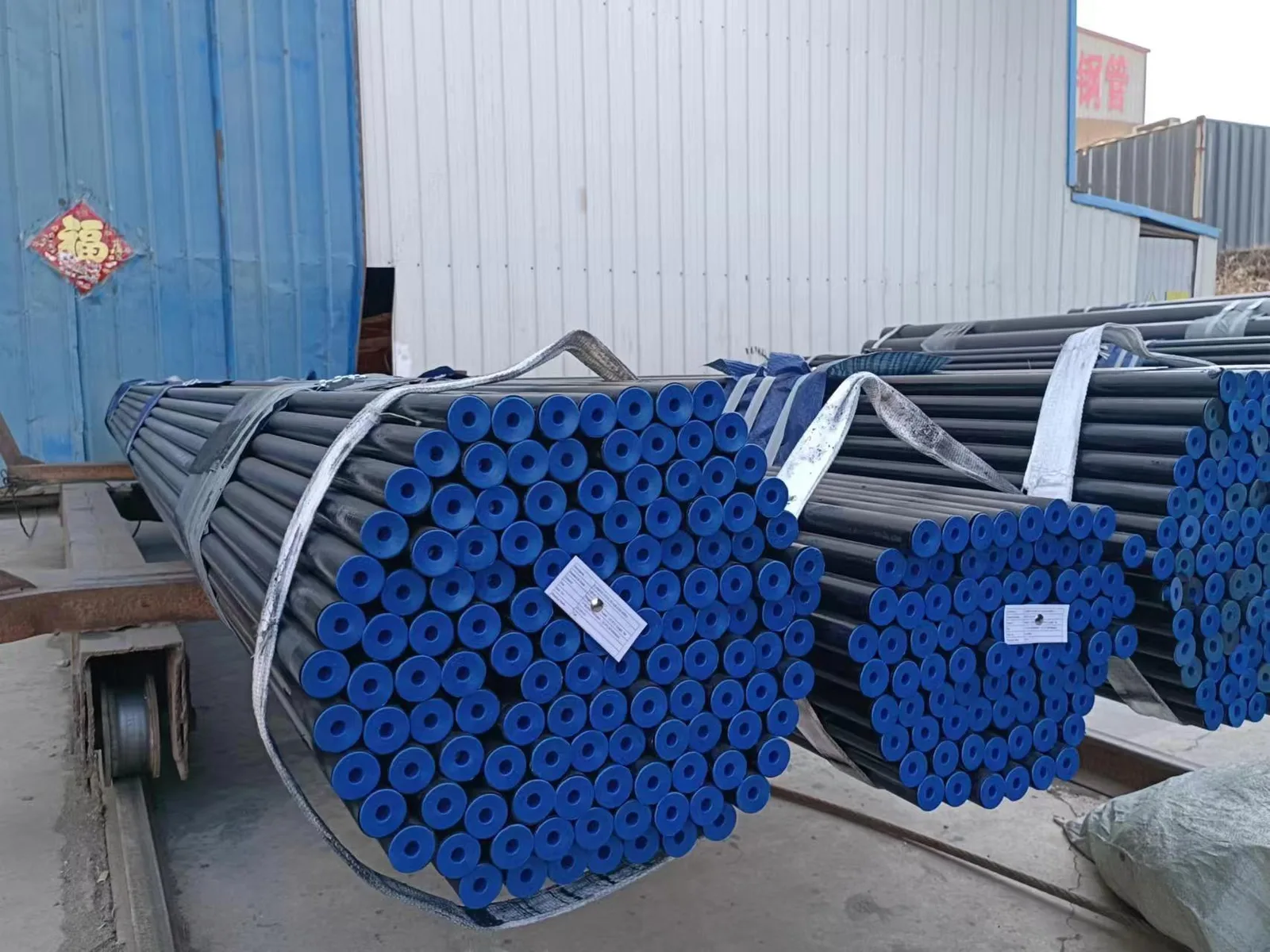
On the supply side, Chinese seamless pipe quotations extended their soft trend on 26 October. Mysteel’s steel pipe daily put the national 108x4.5mm average at 4,244 yuan per tonne, slightly down on the previous trading day, with billet prices adjusting lower and cost support loosening. Lange’s platform, carried by Sina Finance, monitored key-city prices for the same specification at 4,200 yuan, down 5 yuan on the previous session, with 20# hot-rolled billet in Linyi quoted at 3,270 yuan.
Lange’s morning alert adds the inventory detail: 46 mainstream pipe mills held 859,600 tonnes, down only 1,600 tonnes week-on-week, and the decline came from mills cutting run rates and taking maintenance outages rather than from restocking by end users. China Iron and Steel Association data relayed by SteelOrbis showed the five main finished steel products in 21 cities at 8.96 million tonnes on 20 October, down 4.6% from 10 October, with rebar down 9.2%.
At the Istanbul Steel Networking Summit on 26-27 October, the director general of the World Steel Association put global capacity utilisation at roughly 75-76% and warned of about 140 million tonnes of additional capacity coming online in coming years that demand is unlikely to match. That combination - ample Chinese availability and spare global capacity - is why the mill side has little pricing power even as energy prices climb.
What buyers should watch next
Activity data, not sentiment, should drive near-term decisions. A rig count that is flat at 603 with oil rigs at 460 means casing and tubing demand should be planned against a stable run rate, and any upward revision will first show up in the weekly count rather than in mill lead times. Buyers who need seamless pipe for well construction should treat the current period as one to confirm allocations rather than to chase volume.
For line pipe there is a different clock. Sanctioned schemes with 2030 in-service dates still require API specification and coating qualification well in advance, so the relevant next steps are placing specimens into qualification rather than negotiating tonnage prices now; practical sequencing for this is set out in how to buy seamless steel pipe from China.
The sources below disagree on intraday price levels; where they conflict, this article has used the published settlement and the government spot series and said so, rather than picking whichever figure suits an argument.
Sources
- ENGINE — US rig count holds steady (26 October 2026)
- World Oil Monitor — Baker Hughes Rig Count, current US count (23 October 2026 data)
- Valor — Energy Connection, 26 October 2026
- Reuters — Oil settles lower on peace hopes, Saudi attacks limit losses (26 October 2026)
- U.S. EIA — Europe Brent Spot Price FOB, daily series (release 21 October 2026)
- U.S. EIA — Cushing OK WTI Spot Price FOB, daily series (release 21 October 2026)
- Kinder Morgan — Permian Link Project page (FID)
- Kinder Morgan — Projects overview
- Enerdata — Kinder Morgan takes FID on two US gas pipeline projects (23 October 2026)
- Inspectioneering — Kinder Morgan commits $4.7B to major US gas pipeline projects (26 October 2026)
- Pipeline & Gas Journal — 904 miles of new gas pipeline (27 October 2026)
- Midstream Calendar — Kinder Morgan backlog and FID detail (23 October 2026)
- Mysteel — Steel pipe daily, 26 October 2026 (national seamless average)
- Mysteel — Flash prices for steel pipe, 26 October 2026
- Lange Steel Network via Sina Finance — seamless pipe daily review, 26 October 2026
- Lange Steel Network via Sina Finance — morning alert, 26 October 2026
- SteelOrbis — Stocks of main finished steel products in China down 4.6% in mid-October 2026
- SteelOrbis — Steel Networking Summit 2026: global steel capacity growth outpaces demand
- Purely Energy — Brent falls to $115.23 as Qatar pushes Iran mediation (26 October 2026)
- Tenaris — Newsroom (HyLINE II hydrogen pipeline materials meeting, 26 October 2026)