Jereh lands $2.7bn ADNOC awards; Ruwais Diyab FID adds pipe demand
Abu Dhabi’s onshore gas build-out moved into execution this week. On the evening of 4 November, Jereh Group’s Shenzhen-listed arm announced that its Abu Dhabi unit has received three letters of award from ADNOC Onshore worth about $2.697bn in total (about RMB 18.12bn), and two days earlier, at ADIPEC, ADNOC confirmed a final investment decision on the Ruwais Diyab unconventional gas development that will connect to the UAE gas network through new pipeline infrastructure (ADNOC; Jereh announcement). Neither event has a signed contract yet, but both point to years of surface-facility and gathering-line work — exactly the segment where seamless line pipe and OCTG demand concentrates. Jereh shares hit their daily limit in Shenzhen on 4 November (Jiemian via NBD).
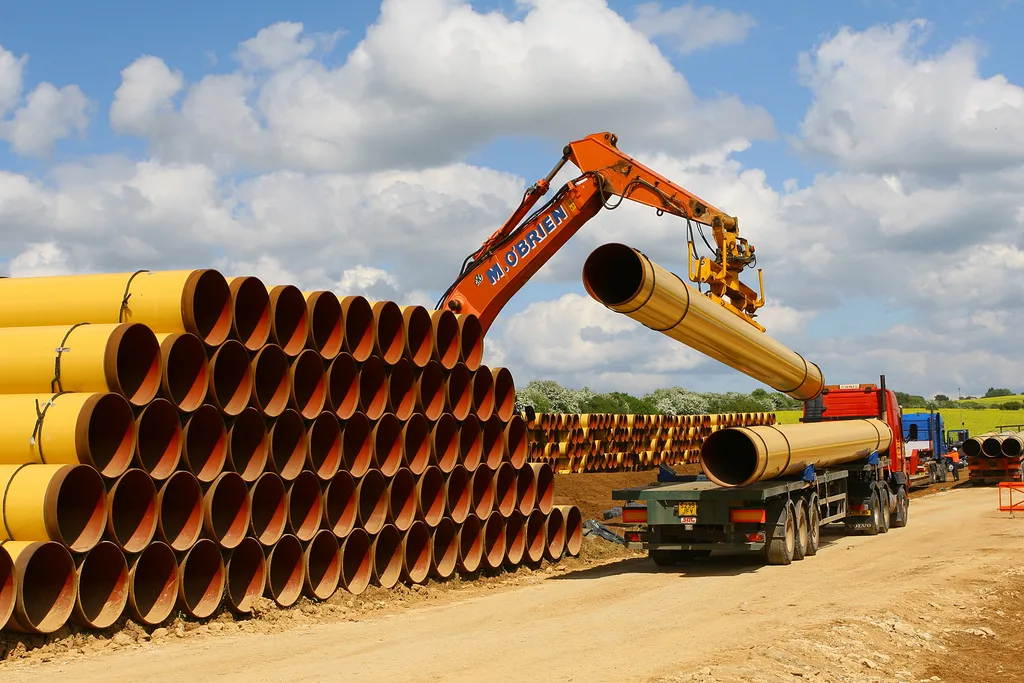
Cover photo: rows of yellow and red coated steel line pipes stacked at an LNG pipeline construction site. Credit: Agathoclea (Wikimedia Commons); licence CC BY-SA 3.0; original file page. Resized and converted for this page; file photo shown for illustration and not connected to any named project on this page.
Three letters of award, three work scopes
The Jereh announcement (No. 2026-075), also carried in full by China Securities Journal and reported by Securities Times, lists three projects, all awarded by ADNOC Onshore to Jereh Oil & Gas Engineering Corporation–Abu Dhabi:
- Ruwais Diyab full-field gas development — $1.7042bn (including $310m of optional items, about RMB 11.4488bn). Jereh will design, procure, construct, commission and start up the surface facilities and pipeline networks — well-pad auxiliaries, a central processing facility, gathering and product export pipelines, and utilities — and then operate the facilities for 60 months after a 29-month construction period. ADNOC Onshore can extend the operating term by up to two five-year periods (Securities Times).
- Bab / North East Bab field surface works — $599.7m. A call-off framework for “One Tie-In” well connections, shortening the cycle for hooking up new producers and reworking existing ones. Work starts on 11 November 2026 and the construction phase runs 60 months from the LOA taking effect (Jereh announcement).
- Bu Hasa field surface works — $392.8m (including $174m of options). Another call-off framework, covering the Bu Hasa, Bida Qimzan and Huwaila fields, mostly wellhead surface facilities and gathering pipelines, with a 36-month construction period extendable by up to 24 months (NBD).
All three LOAs total about $2.6967bn (about RMB 18.1164bn). Formal agreements must be finalized within 90 days of each LOA commencement date, and ADNOC Onshore may suspend payments under the LOA if they are not (Jereh announcement). The company noted the projects will not materially affect its 2026 results.
Ruwais Diyab FID: gas from 2029 through new pipelines
ADNOC announced at ADIPEC on 2 November that it has taken FID on the Ruwais Diyab Unconventional Gas Development, its first large-scale unconventional gas project. The project will deliver 345 million standard cubic feet per day of raw gas from 2029 over a 25-year period, with potential to reach up to 1 billion scfd in the future. Gas will be processed on site and connected to the UAE’s gas network through new pipeline infrastructure, supporting domestic supply and ADNOC’s LNG export ambitions (ADNOC; JPT). ADNOC Onshore is delivering the development under a design-build-operate model (Oil Review Middle East).
The Jereh LOA for Ruwais Diyab is the execution piece of that decision. MEED reported that ADNOC awarded Jereh the DBO contract and that the formal kick-off meeting is expected in late November (MEED via Guofu); the company filing confirms the award itself (Jereh announcement).
What it means for seamless pipe demand
The three awards map directly onto seamless-pipe-heavy scopes. Gathering and product export pipelines from the well pads to the central facility and the receiving terminals are classic line pipe work — buyers typically specify API 5L PSL2 for these systems, with seamless grades favoured for high-pressure and sour-service gathering lines (API 5L line pipe). The One Tie-In frameworks at Bab/NEB and Bu Hasa are wellhead-connection programmes: flowlines, wellhead modules, lift-gas skids and injection wells all pull OCTG and small-diameter seamless pipe (how oil and gas pipelines are built).
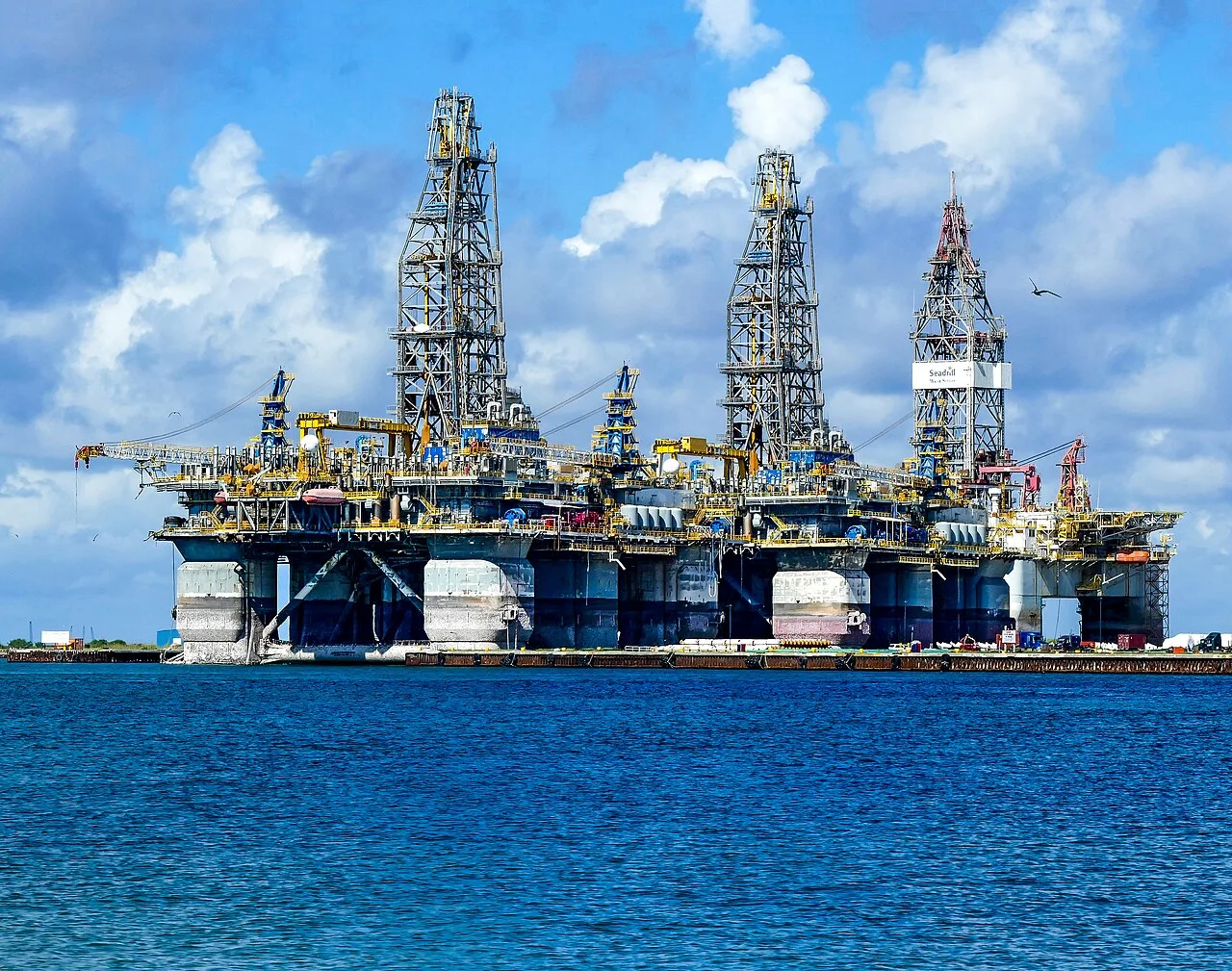
Offshore, the same week produced a comparable signal: Subsea7 announced on 2 November a “substantial” ($150–300m) EPCI award from Aker BP for the Lyra field in the northern North Sea, covering gas lift and production pipelines with a pipe-in-pipe production line, targeting first oil in 2028 (Subsea7; Offshore Energy). Pipeline fabrication starts at Subsea7’s Vigra spool base, with offshore installation spread over 2026–2028 — a reminder that long-lead pipe procurement is being locked in well before first production.
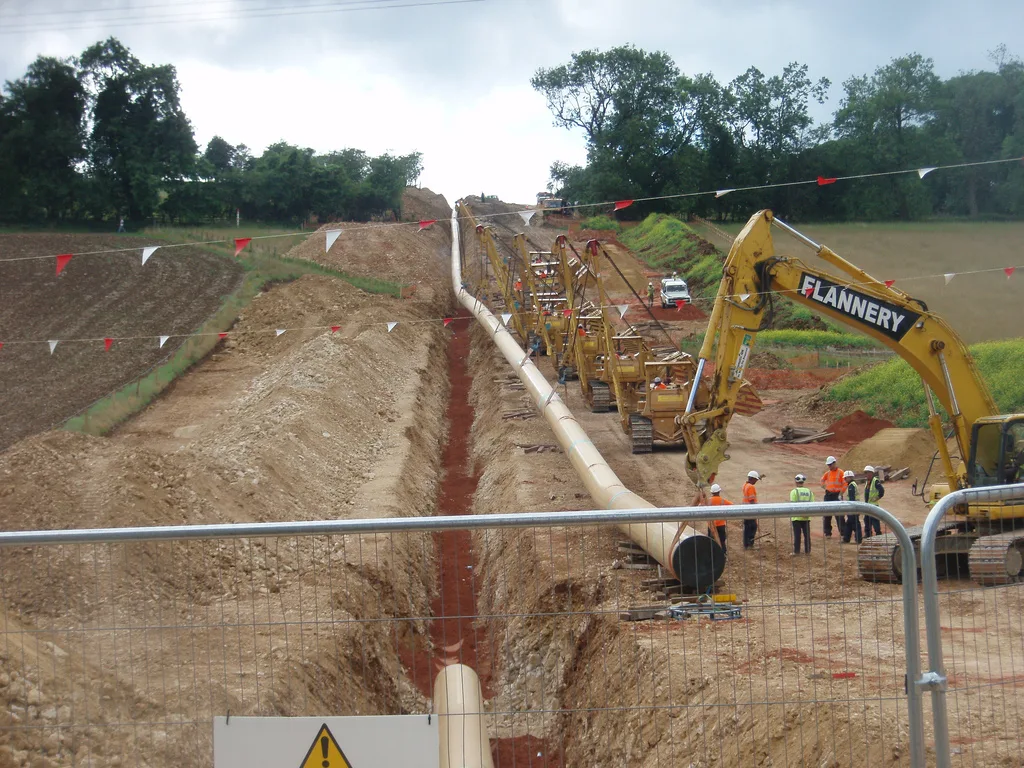
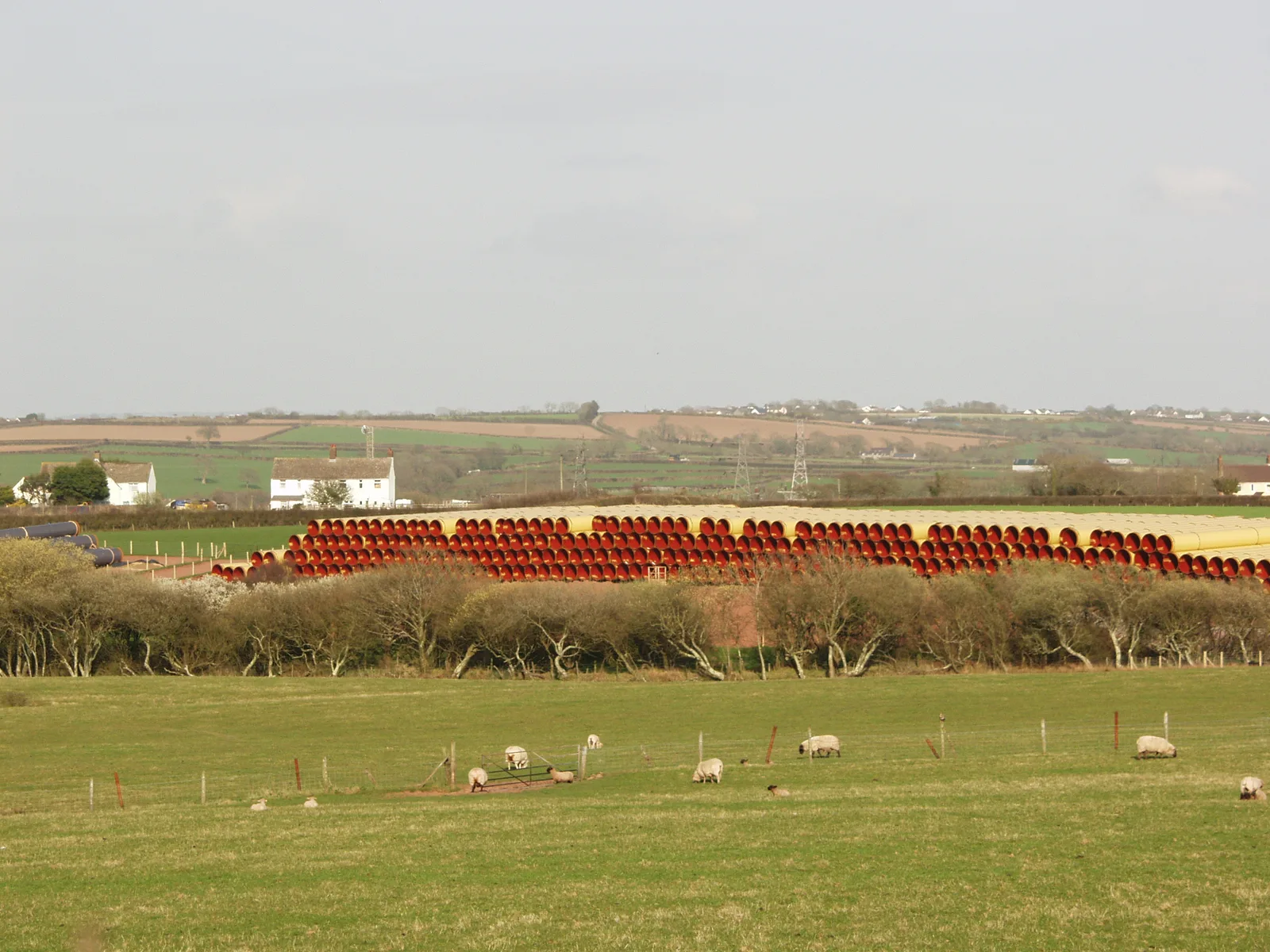
Photo: the Wormington to Sapperton gas pipeline under construction in Gloucestershire, England. Credit: PROJECT_MANAGER (Wikimedia Commons); licence CC BY-SA 2.0; original file page. Resized and converted for this page; file photo shown to illustrate onshore pipeline construction and not connected to any named project on this page.
Context: a widening UAE gas programme
The awards extend a year of UAE gas expansion. In July ADNOC sanctioned the $6.2bn Umm Shaif Gas Cap development, and in August ADNOC Gas committed over $8bn to the Rich Gas Development project (Dow Jones via Morningstar). CNPC, meanwhile, is a partner in the Bab Gas Cap concession — expected to produce 1.5 billion cubic feet per day — and in Umm Shaif, a sign of how deeply Chinese energy companies are now embedded in Abu Dhabi’s upstream (The National). Jereh already held a $920m digitalization EPC contract with ADNOC Onshore from 2025 (Jereh announcement). For Chinese seamless pipe and OCTG suppliers, Middle East surface-facility awards won by Chinese EPCs are increasingly the channel through which export volumes reach the region, complementing the OCTG tender flow tracked in Kuwait and Saudi programmes.
What to watch next
- Formal agreements. All three LOAs require signed contracts within 90 days of the commencement date; slippage lets ADNOC Onshore suspend payments (Jereh announcement).
- Procurement notices. Gathering-line and product-export pipe specifications for Ruwais Diyab, and the call-off cadence at Bab/NEB and Bu Hasa, will indicate when seamless line pipe and OCTG tonnage firms up.
- US trade remedy. Separately, the US International Trade Commission held its preliminary conference on 5 November in the AD/CVD investigations on seamless carbon and alloy steel standard, line and pressure pipe from Georgia and India (Inv. Nos. 701-TA-810 and 731-TA-1811-1812), a case Indian and Georgian exporters will follow closely (USITC).
Sources
- Jereh announcement No. 2026-075, cninfo (2026-11-05)
- Securities Times (2026-11-05); NBD (2026-11-04)
- ADNOC press release (2026-11-02); JPT (2026-11-03); Oil Review Middle East (2026-11-03); Dow Jones via Morningstar (2026-11-02)
- Subsea7 press release (2026-11-02); Offshore Energy (2026-11-02)
- USITC preliminary conference notice (2026-11-05)