US initiates AD/CVD probes on seamless pipe from India and Georgia
The Federal Register of 9 November 2026 carries two Department of Commerce notices that formally open trade-remedy investigations into seamless pipe: antidumping (less-than-fair-value) investigations on seamless carbon and alloy steel standard, line, and pressure pipe from Georgia and India (case nos. A-833-001 and A-533-956), and a countervailing duty investigation on the same pipe from India (case no. C-533-957) (Commerce/Federal Register, AD initiation; Commerce/Federal Register, CVD initiation). Both notices are applicable as of 4 November 2026. This is the next procedural step in the case we covered on 21 October, when the USITC instituted preliminary-phase investigations 701-TA-810 and 731-TA-1811-1812 on the same petitions — see that report. Nothing has been determined yet: no duty applies to entries today, and the alleged margins discussed below are petition-based estimates, not findings.
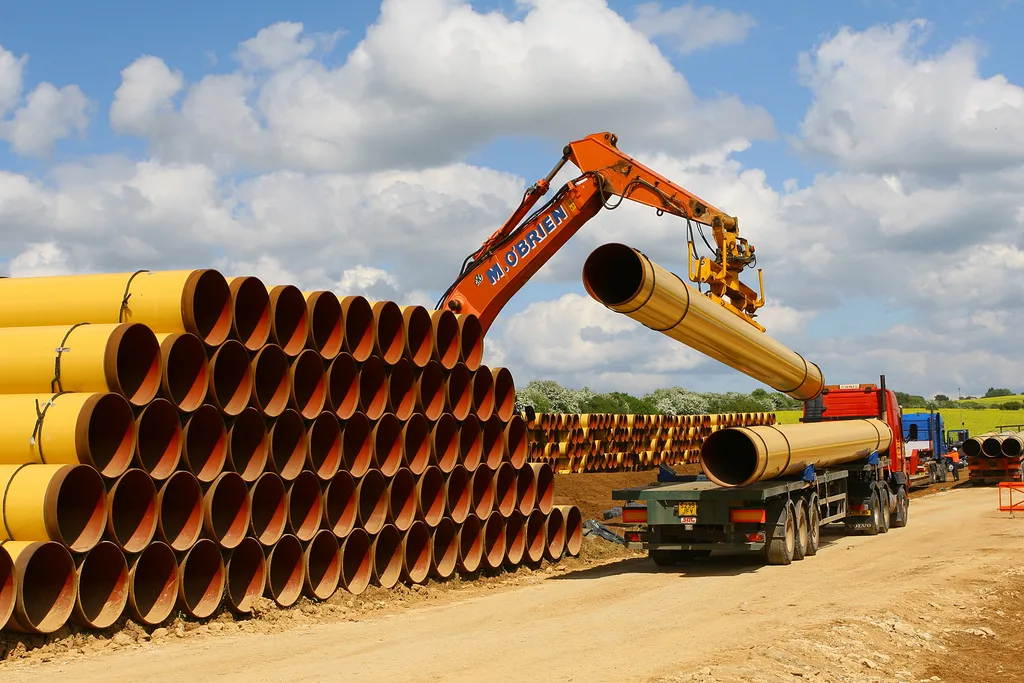
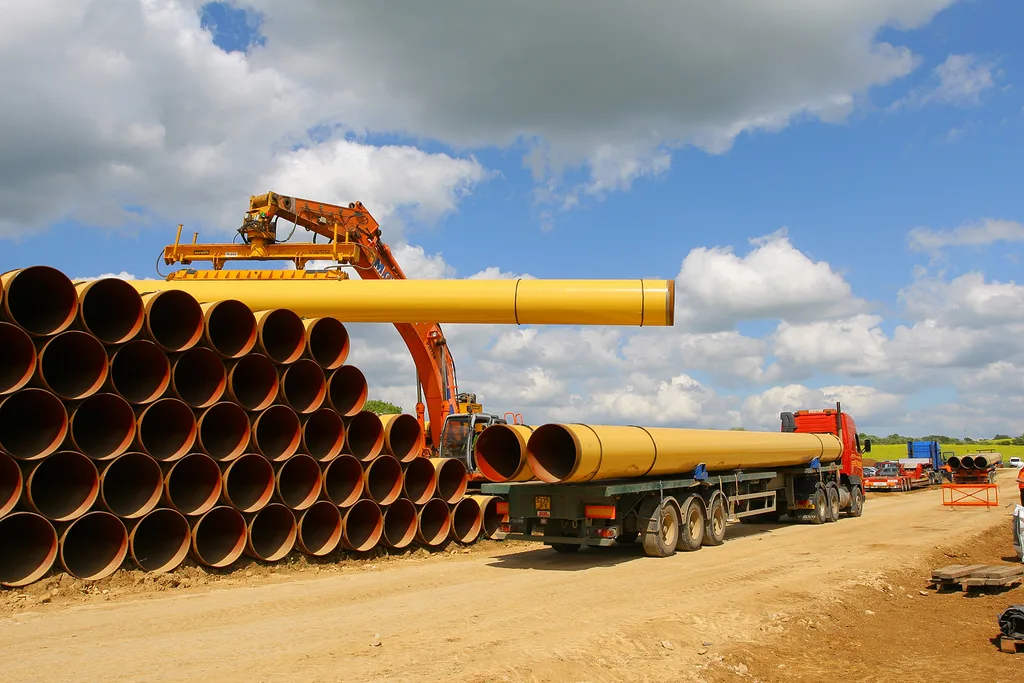
Cover photo: steel pipes stacked in a pipeline construction pipe yard. Credit: PROJECT_MANAGER (Wikimedia Commons); licence CC BY-SA 2.0; original file page. Resized and converted for this page; file photo shown for illustration and not connected to any party named on this page.
What Commerce initiated, and what it has not decided
The initiation notices record that Commerce received the petitions on 15 October 2026 from Tenaris USA, Vallourec Star LP and the United Steelworkers, issued supplemental questionnaires in late October, and “based upon the examination of the Petitions and supplemental responses” found the petitions met the requirements of section 732 of the Tariff Act of 1930 (Commerce/Federal Register, AD initiation; The Washington Gazette). On the subsidy side, Commerce “find that there is sufficient information to initiate a CVD investigation on 24 programs alleged by the petitioners”, after holding consultations with the Government of India on 3 November 2026 (Commerce/Federal Register, CVD initiation).
The scope covers seamless carbon and alloy steel (other than stainless) pipes and redraw hollows up to 16 inches (406.4 mm) in outside diameter, including pipe made to ASTM A-53, A-106, A-333, A-334, A-589, A-795, A-1024 and API 5L. Exclusions still matter for buyers: oil country tubular goods (drill pipe, casing, tubing and coupling stock), pipe meeting the chemistry of ASTM A-335, aerospace, hydraulic and bearing tubing, and unattached couplings are all outside the case (Commerce/Federal Register, AD initiation). Standard, line and pressure pipe inside the scope is the everyday stock of ASTM A106 carbon steel pipe and API 5L line pipe — for how the seamless route differs from welded alternatives, see our explainer.
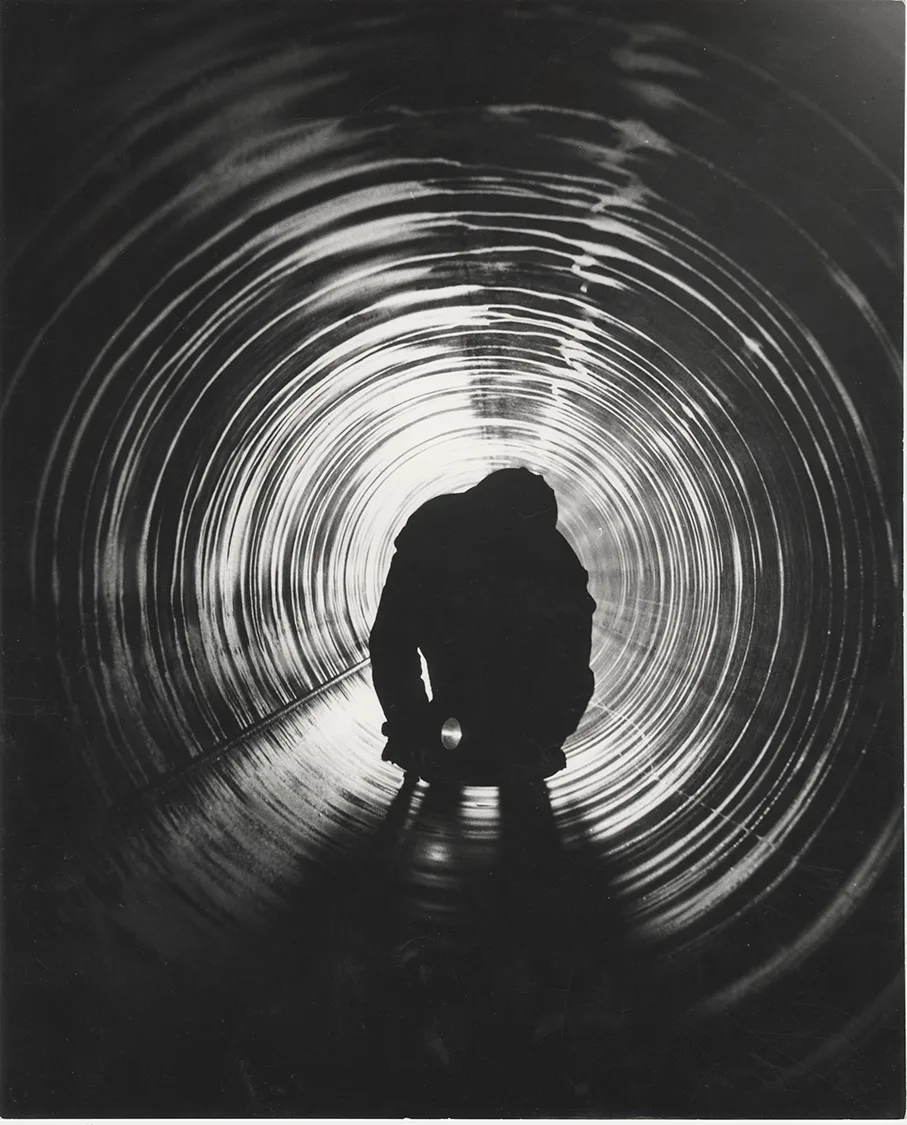
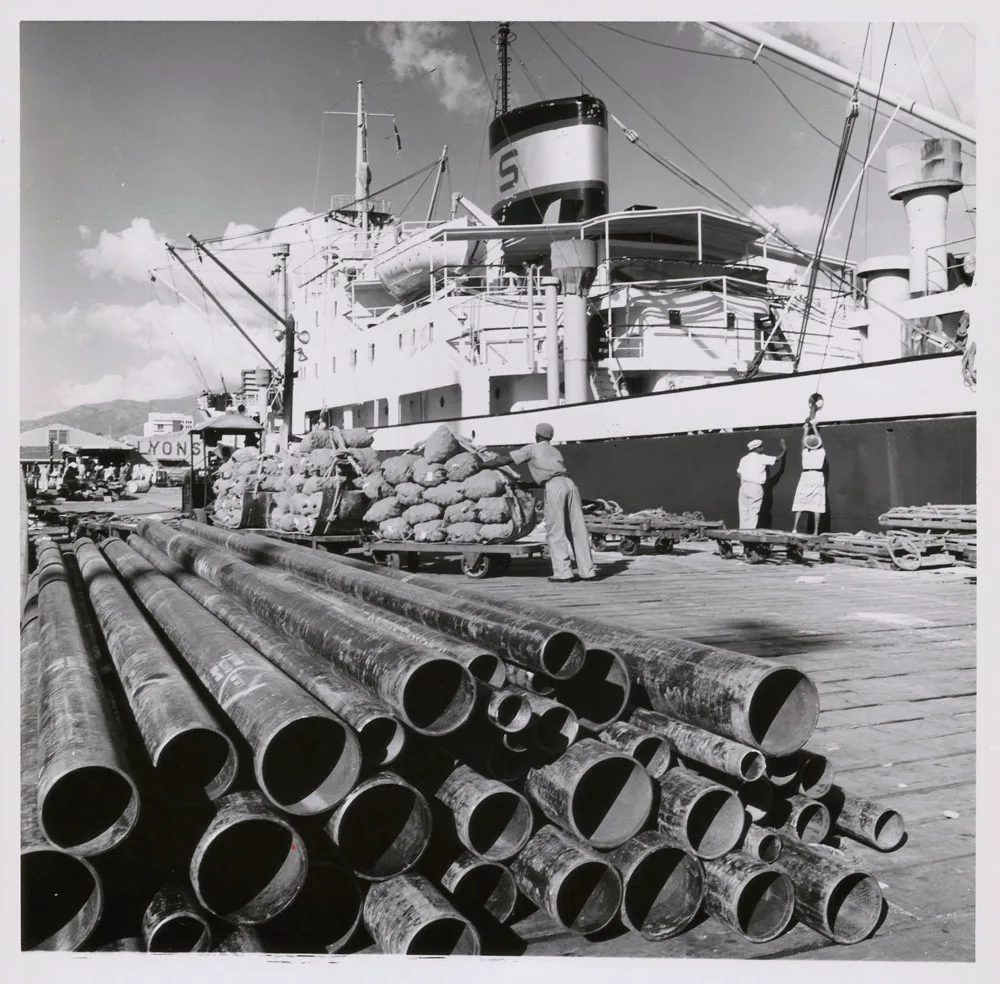
Image: a worker inside a large pipe performing a quality-control inspection at the ITALSIDER steel centre in Taranto, 1963. Credit: Touring Club Italiano / ITALSIDER archive, 1963 (Wikimedia Commons, unknown photographer); licence CC BY-SA 4.0; original file page. Resized and converted for this page; a historical file photo shown to illustrate pipe inspection practice, not connected to the investigations or any named party.
Alleged margins and the Georgia surrogate problem
At initiation, Commerce reported estimated dumping margins of 41.03 to 63.57 percent for India. For Georgia — treated as a non-market economy — the estimates depend entirely on which surrogate country is used: 173.72–188.52 percent with Brazil, 113.87–133.00 percent with Colombia, and 277.69–286.29 percent with Malaysia (Commerce/Federal Register, AD initiation). Independent write-ups match the Indian range: The Washington Gazette and Mainstreet both report the 41.03–63.57 percent band for Indian pipe and stress that these are allegations, not duties. Which surrogate data Commerce eventually adopts for Georgia is explicitly left open for comment — an early signal that the Georgian margins could move substantially in either direction.
The periods of investigation also differ by country: 1 October 2025 through 30 September 2026 for India, but only 1 April through 30 September 2026 for Georgia, because Georgia is handled as a non-market economy (The Washington Gazette).
Deadlines that now apply to exporters and importers
- 18 November 2026 — quantity-and-value (Q&V) questionnaire responses are due via ACCESS by 5:00 p.m. ET; companies that miss it cannot be considered for separate-rate status in the Georgia NME case (The Washington Gazette).
- 21 days after publication — separate-rate applications for Georgian exporters/producers, i.e. roughly by the end of November 2026 (Commerce/Federal Register, AD initiation).
- 24 November 2026 — scope and product-characteristics comments, with rebuttals by 4 December 2026. Scope comments decide which specifications actually get caught; the petitioners revised the scope twice during the petition review (Commerce/Federal Register, AD initiation).
- Around 30 November 2026 — the ITC’s preliminary injury determination, due within 45 days of the 15 October petitions; a negative vote would terminate the investigation for that country (Commerce/Federal Register, AD initiation; USITC institution notice).
- Early 2027 — Commerce preliminary determinations are due no later than 140 days after initiation for AD and 65 days for CVD unless postponed (Commerce/Federal Register, AD initiation; Commerce/Federal Register, CVD initiation).
Where the case sits in a month of tightening pipe walls
The initiation extends a November in which pipe barriers moved on several fronts. Cash deposits of 47.21–68.88 percent started on 4 November for OCTG from Austria, Taiwan and the UAE, with voestalpine Tubulars holding a single 47.21 percent Austrian rate (SteelOrbis). Outside the US, Morocco extended safeguard duties on welded tube and pipe to November 2029, starting at 19 percent on 6 November (SteelOrbis), and importers’ association EURANIMI asked the European Commission to raise Ukraine’s seamless stainless tube quota from 6,524 mt to at least 8,400 mt from 2027 (SteelOrbis).
India now sits on both sides of the table: it maintains its own USD 268/tonne duty on Chinese seamless tubes under the sunset review we covered on 30 October (MOFCOM WTO/FTA notice), while its exports of standard, line and pressure pipe to the US face the new initiation. For Chinese mills, OCTG remains outside this case’s scope, and China’s own OCTG already carries US duties from earlier orders — so the direct scope overlap is limited, but a further-tightened US pipe regime narrows the re-routing options that have kept global pipe trade flowing. None of these knock-on readings is an agency finding; they are our inferences, clearly labelled as such.
What buyers should watch
- Track the ITC vote first. Around 30 November 2026 the Commission decides whether the case lives; a negative injury finding ends it for that country (The Washington Gazette).
- Scope positioning before 24 November. If you ship A-53/A-106/API 5L-equivalent seamless pipe from India or Georgia, or buy pipe whose chemistry matches A-335, the scope comment window is the moment to put the technical record on file (Commerce/Federal Register, AD initiation).
- Keep entry records for the POI windows — 1 October 2025–30 September 2026 (India) and 1 April–30 September 2026 (Georgia), plus calendar year 2025 for the Indian CVD case, since supplier responses will be checked against entry data (Stable Software).
- Cash deposits, if any, only start after an affirmative Commerce preliminary determination, so contract duty pass-through clauses should reference the actual determination dates rather than assume today’s rates (Stable Software).
Sources
- Commerce/Federal Register — Seamless Carbon and Alloy Steel Standard, Line, and Pressure Pipe From Georgia and India: Initiation of Less-Than-Fair-Value Investigations (91 FR 70856, FR Doc 2026-22835)
- Commerce/Federal Register — Seamless Carbon and Alloy Steel Standard, Line, and Pressure Pipe From India: Initiation of Countervailing Duty Investigation (91 FR 70847, FR Doc 2026-22836)
- USITC/Federal Register — Institution of AD/CVD Investigations, Nos. 701-TA-810 and 731-TA-1811-1812 (Preliminary), 20 October 2026
- The Washington Gazette — Commerce opens antidumping investigations of seamless carbon and alloy steel pipe from Georgia and India, 8 November 2026
- Mainstreet — Steel Pipe Importers Face Duty Probes on India, Georgia, 6 November 2026
- Stable Software — Seamless Pipe AD/CVD Investigations: Importer Guide, 6 November 2026
- SteelOrbis — US issues preliminary affirmative AD determination on OCTG from Austria, 6 November 2026
- SteelOrbis — Morocco extends safeguard duties on steel pipe imports until November 2029, 4 November 2026
- SteelOrbis — EURANIMI calls for higher EU stainless steel tube quota for Ukraine from 2027, 5 November 2026
- MOFCOM WTO/FTA — 印度对华无缝钢管和空心型材作出第二次反倾销日落复审终裁, 3 November 2026