UK steel measure: welded line pipe pays 50%, seamless stays at zero
The same pipeline duty, quoted two ways, now lands in the United Kingdom at two very different prices. Since 1 July 2026 Britain has run its own steel trade measure in place of the expired safeguard: tariff-free import volumes cut by 51%, and 50% duty by value on anything above the quota (GOV.UK decision notice, updated 3 November 2026). The 20 product categories in that measure include welded tube — large welded line pipe, gas pipes, other welded pipes. They do not include a seamless tube category, and the tariff record proves the consequence: commodity 7304 19 90 00, seamless pipe above 406.4 mm outside diameter, carries a third-country duty of 0.00% and no quota order, while 7305 11 00 00, longitudinally submerged arc welded line pipe, carries 50.00% (UK Trade Tariff, 7305 11 00 00; 7304 19 90 00). From 26 November the gap widens in the other direction: two authorised-use schemes will let UK line pipe and bright bar processors import specified strip and plate tariff free (GOV.UK implementation notice, 3 November 2026).
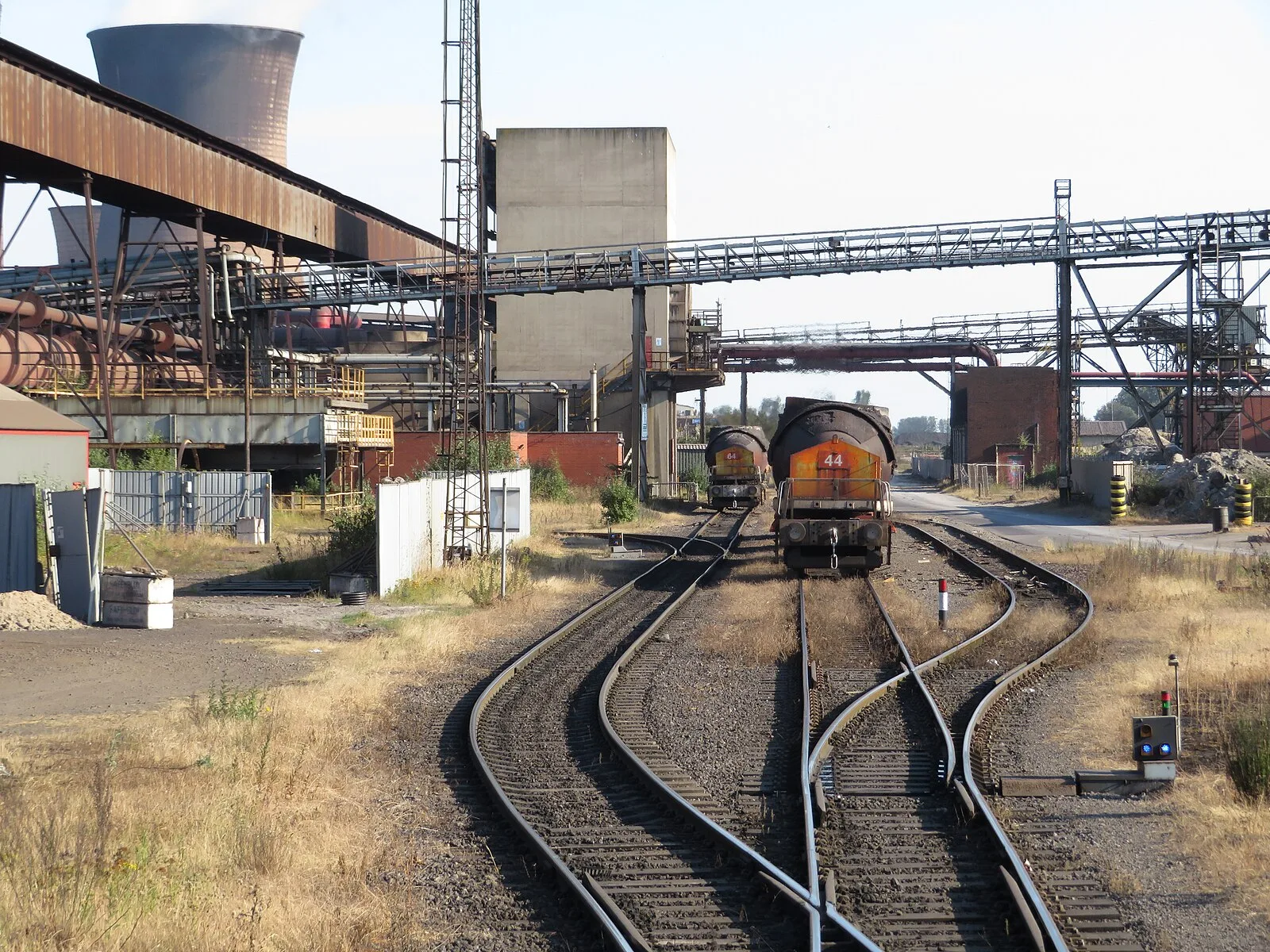
Cover image: torpedo ladles moving hot metal on rail tracks inside the Scunthorpe steelworks complex, England. Credit: Gareth James (Wikimedia Commons); license CC BY-SA 2.0; original file page. The version used here has been resized and converted to WebP; the photo is illustrative and is not tied to the named measure.
What the UK measure actually does
The measure replaced the steel safeguard, whose quotas and 25% additional duty stopped applying after 30 June 2026. From 1 July, duty-free volumes were cut by 51% against the safeguard, and imports above those levels pay 50% of value, calculated before other import duties. The same page sets out how the quota is administered: 20 product categories, volumes split by quarter, access granted by HMRC to UK importers on a first come, first served basis, and unused country or residual quota rolling into the next quarter within the same quota year but not beyond it (GOV.UK decision notice).
Chinese trade alerts summarised the same package when it was finalised: the planned cut was eased from 60% to 51% after industry consultation, the annual duty-free volume came to roughly 3.2 million tonnes, and the 50% rate applies by value (CCPIT Zhejiang, 30 June 2026; Cailian Press, 25 June 2026). The scope has already moved once: on 1 October 2026 two non-alloy wire codes, 72173049 and 72173090, were removed and their rate cut from 50% to 0%, with Category 28 quota volumes left unchanged.
The category list is where the pipe trade splits. Categories 20, 21, 25A, 25B and 26 cover gas pipes (7306 30 41 and related codes), hollow sections, large welded tubes and other welded pipes. There is no 7304 heading anywhere in the 20 categories, a point visible in the published list itself and in Chinese reproductions of it (NetEase, 26 June 2026).
One pipeline duty, two duty outcomes
Take two commodities a gas transmission project can both use. Welded line pipe 7305 11 00 00 shows a third-country duty of 50.00% for all countries, softened only by non-preferential quota order 058653, which is open to countries other than EU member states and excludes Japan, South Korea and the United States. On 22 November 2026 that quota still had 282,762.520 kg available against an opening balance of 384,000 kg for the quarter running to 31 December; the balance included 182,575.520 kg transferred from the July–September period, and the last allocation date was 13 November (UK Trade Tariff, 7305 11 00 00). Once the order is exhausted, the 50% rate applies to everything else, including Chinese-origin pipe.
Seamless pipe above 406.4 mm outside diameter sits on the other side of the line. Commodity 7304 19 90 00 shows a third-country duty of 0.00% for all countries, no quota order, and no anti-dumping measure on the page; the only additional duty listed is the 35% rate applied to Belarus and Russia (UK Trade Tariff, 7304 19 90 00). An independent UK sourcing guide reached the same reading of the measure from the goods side: all seven 7305 subheadings fall inside it, duty free within quota and 50% once the quota is used (Cambridge China Bridge guide). The same publisher’s seamless guide checked two 7304 codes, 7304312030 and 7304410090, against the tariff on 3 October 2026 and found a 0% third-country duty on both (seamless guide).
One nuance prevents over-reading the carve-out. Seamless tube is absent from the 20 quota categories, yet it does appear in the downstream product list attached to the Category 1 authorised-use quota, which lets processors import hot-rolled coil and plate duty free and transform it into listed products; that list names “other seamless tubes” from 73041910 through 73045989, under a scheme with 595,950 tonnes available in each of the first two quarters and a 40% cap on any single country or territory (GOV.UK decision notice). In practice, UK tube making can obtain duty-free steel input through that route, while imported finished seamless tube pays nothing at the border.
From 26 November: duty-free inputs for line pipe and bright bar
The implementation notice published on 3 November adds two authorised-use schemes from 26 November 2026. The line pipe scheme covers six commodity codes: 7208521000 and 7208529900 for non-alloy and other alloy hot-rolled sheets and strips, plus 72085120, 7225404000, 72085191 and 72085198 for quarto plates. The bright bar scheme covers nine codes across hot-rolled strip, alloy merchant bars and light sections, and non-alloy merchant bars and light sections. Eligibility is tied to those codes and to the declared manufacturing use (GOV.UK implementation notice).
Read the codes before assuming relief. All six line pipe inputs are flat products — hot-rolled strip and quarto plate. That is the feedstock for welded line pipe. A seamless mill starts from round billet and pierces it, so no seamless producer can claim the line pipe scheme on its own output; the scheme lowers the input cost of the competing welded route. Chinese trade coverage of the same notice framed it in exactly those terms, as support for UK line pipe and bright bar producers importing specified steel for their production processes (SMM, 4 November 2026). The relief also enters the 12-month review of the July 2026 measure, which is the mechanism that could later extend, tighten or withdraw it.
Why the seamless carve-out matters commercially
For a Chinese seamless exporter, the arithmetic is unusually clean. A 24-inch seamless line pipe shipment to a UK buyer enters at 0% third-country duty with no quota allocation to chase. The welded alternative pays 0% only while quota order 058653 has room, and 50% after that. On a USD 1,000 per tonne cargo, that is a USD 500 per tonne swing, which is far larger than the usual freight or mill spread between the two routes. While the United States runs anti-dumping and countervailing cases on seamless standard, line and pressure pipe, the EU administers quarterly tariff-rate quotas with 50% above quota, India applies a fixed duty of up to USD 268 per tonne and Canada is reviewing its line pipe order, the UK stands out as the open end of the Western market (EU quota article; US initiation).
Open does not mean permanent. Three things can change the calculation before the 2027 buying season. The 12-month review of the measure is the formal route to re-inclusion; the authorised-use schemes show the government is willing to intervene at product level; and the separate carbon border obligation has its own registration rules that importers must check per commodity code, independent of duty. A buyer comparing an API 5L line pipe offer should therefore price duty and carbon as separate lines rather than one landed-cost number (API 5L line pipe; API 5L specification guide).
What to verify before quoting UK volumes
Start with classification, because the duty follows the code and not the description. Seamless line pipe above 406.4 mm outside diameter sits in 7304 19 90 00; the same nominal service supplied as longitudinally welded pipe sits in 7305 11 00 00. A misdeclaration moves the consignment from 0% to a 50% exposure.
Then check quota timing, not just quota existence. Access is first come, first served, the quarter closes on 31 December, and the published balance is a snapshot that moved as recently as 13 November. For welded volumes, confirm with the UK importer which order number is being used and what balance remains on the declaration date.
Finally, diarise 26 November. If a UK customer processes line pipe or bright bar, its input costs change that day, which can shift the price it is willing to pay for finished pipe. The measure itself is under a 12-month review, and the review, not the current rate, is what 2027 contracts should be written against.
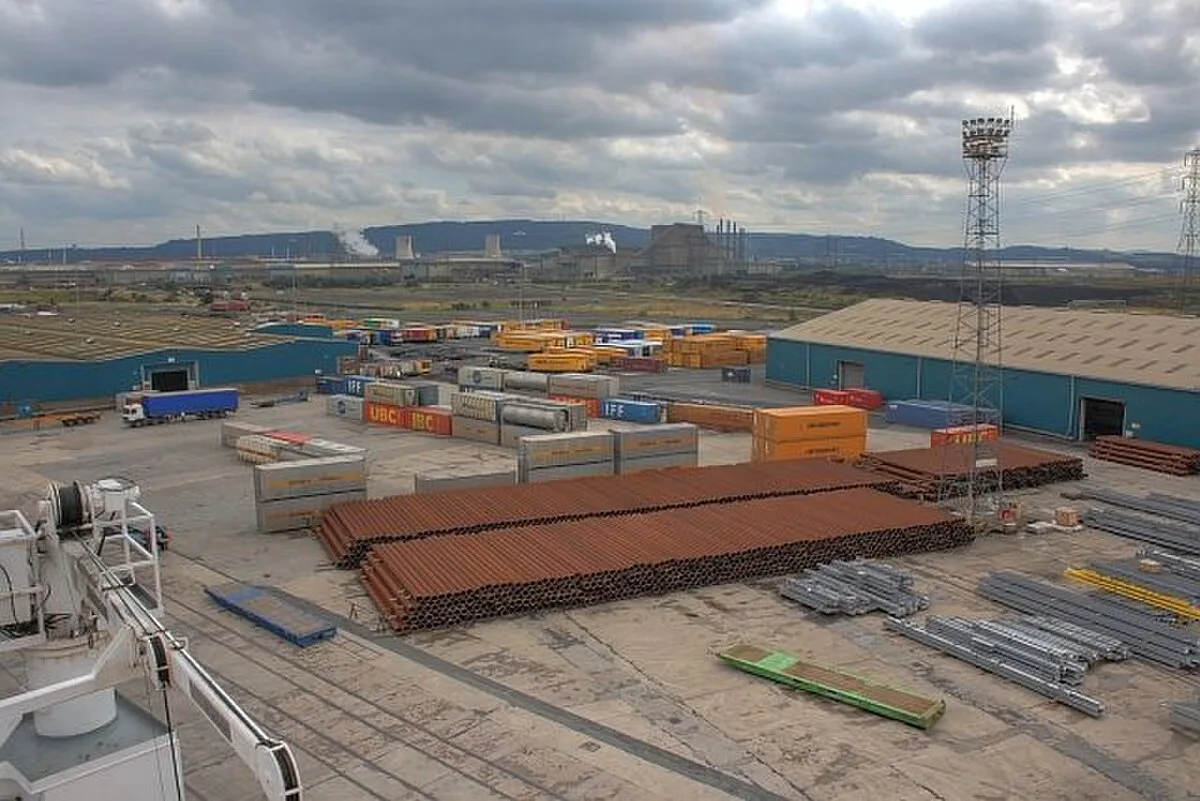
Steel pipe stacked at Teesport awaiting shipment, with the Teesside steelworks behind. Credit: Mick Garratt (Wikimedia Commons); license CC BY-SA 2.0; original file page. The version used here has been resized and converted to WebP; the photo is illustrative and does not show the consignments discussed above.
Sources
- UK’s steel trade measure from 1 July 2026 — decision notice, updated 3 November 2026
- Implementation notifications on the UK steel trade measure, updated 3 November 2026
- UK Trade Tariff — commodity 7305 11 00 00
- UK Trade Tariff — commodity 7304 19 90 00
- UK trade remedies notice — anti-dumping duty on welded tubes and pipes from Belarus and China
- CCPIT Zhejiang — UK steel measure summary, 30 June 2026
- Cailian Press — quota cut eased to 51%, 25 June 2026
- NetEase — UK category list, 26 June 2026
- SMM — UK authorised use schemes for line pipe and bright bar, 4 November 2026
- Cambridge China Bridge — large-diameter welded pipe guide
- Cambridge China Bridge — seamless tube guide
- SteelOrbis — Brazil renews steel import quotas, 21 November 2026
- SteelOrbis — South Africa sets AfCFTA tariff cuts from January 2027, 20 November 2026