Liaocheng orange alert cuts seamless pipe output; supply stays high
Liaocheng, the heart of China’s largest seamless pipe cluster in western Shandong, issued an orange heavy-pollution alert at 12:00 on 1 November and started its Level II emergency response at 12:00 on 2 November. According to Lange Steel’s mill survey, seamless pipe producers in the city must stop their only rolling line outright or keep just one of several lines running, a cut Lange estimates at roughly 30,000 tonnes of seamless pipe output with no end date announced. The curtailment lands in the seasonal low season, and with national weekly output still near 422,900 tonnes it is unlikely to lift prices on its own.
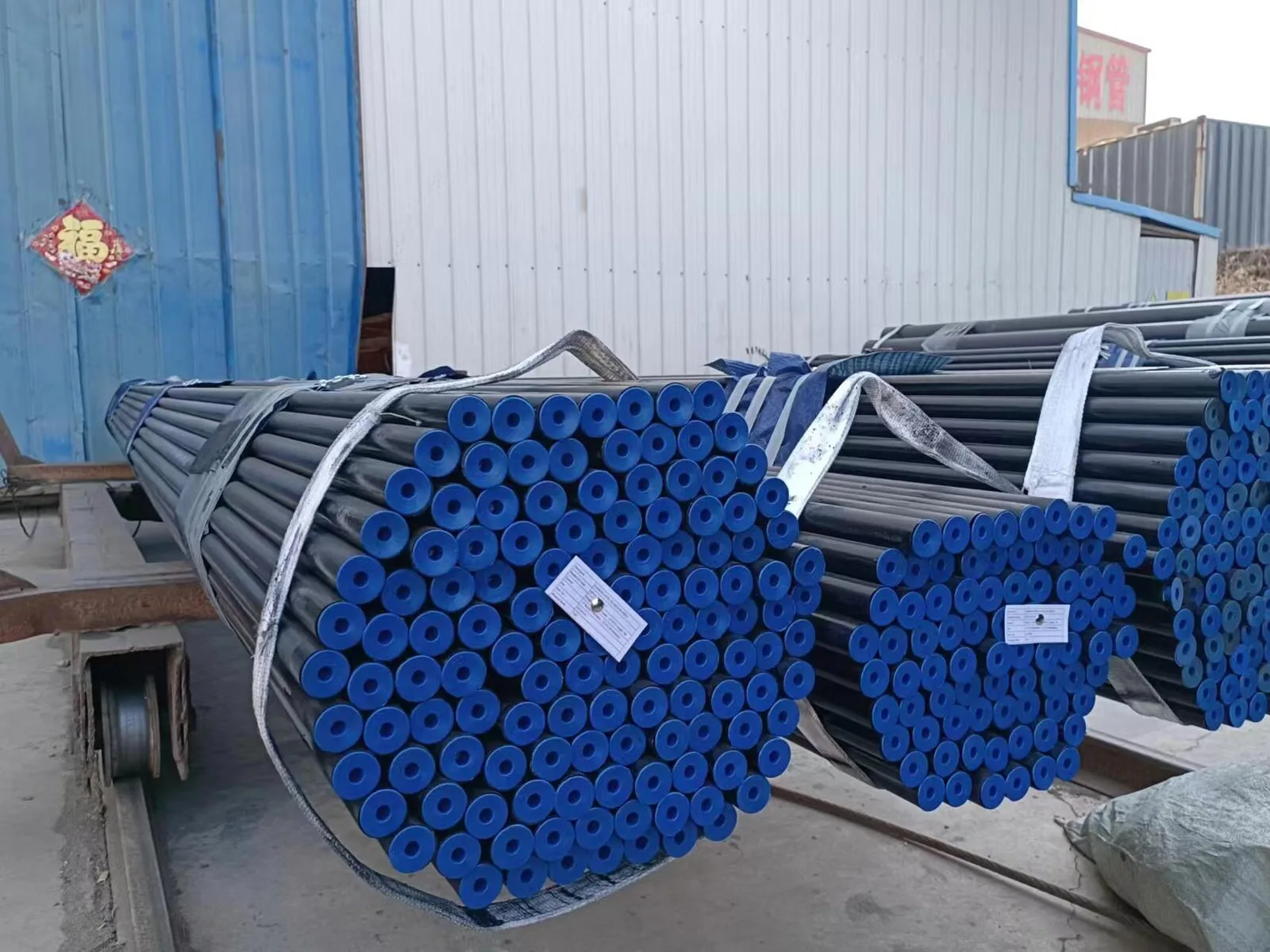
Cover photo: bundles of seamless steel pipes with blue end caps in a warehouse yard. Credit: Seamless Steel Pipes (Wikimedia Commons); licence CC BY-SA 4.0; original file page. Resized and converted for this page; the photograph is illustrative and is not connected to any named mill or alert.
What the Level II response stops at pipe mills
The city notice requires all air-polluting industrial enterprises to execute the orange-alert production suspensions listed in Liaocheng’s fixed-source emergency reduction list. Lange Steel’s 2 November survey translates that into pipe-mill terms: mills with a single line stop completely, mills with two or more keep one running, and the output loss is estimated at about 30,000 tonnes until further notice.
Liaocheng did not act alone. Wenshang county in Jining, Shandong, issued its orange alert at 12:00 on 1 November with the same 12:00 on 2 November Level II start (county notice via in-en.com), and Binzhou moved a day later, with its Level II response starting 3 November and mandatory emission cuts of at least 20 percent (The Paper). The Ministry of Ecology and Environment had forecast on 31 October that central-southern Beijing-Tianjin-Hebei could see moderate pollution in the first half of November (MEE). The wave is still expanding: Jiyuan in Henan starts its own orange alert, Level II controls, at 00:00 on 6 November, with industrial plants ordered to cut emissions by at least 20 percent a day (Mysteel).
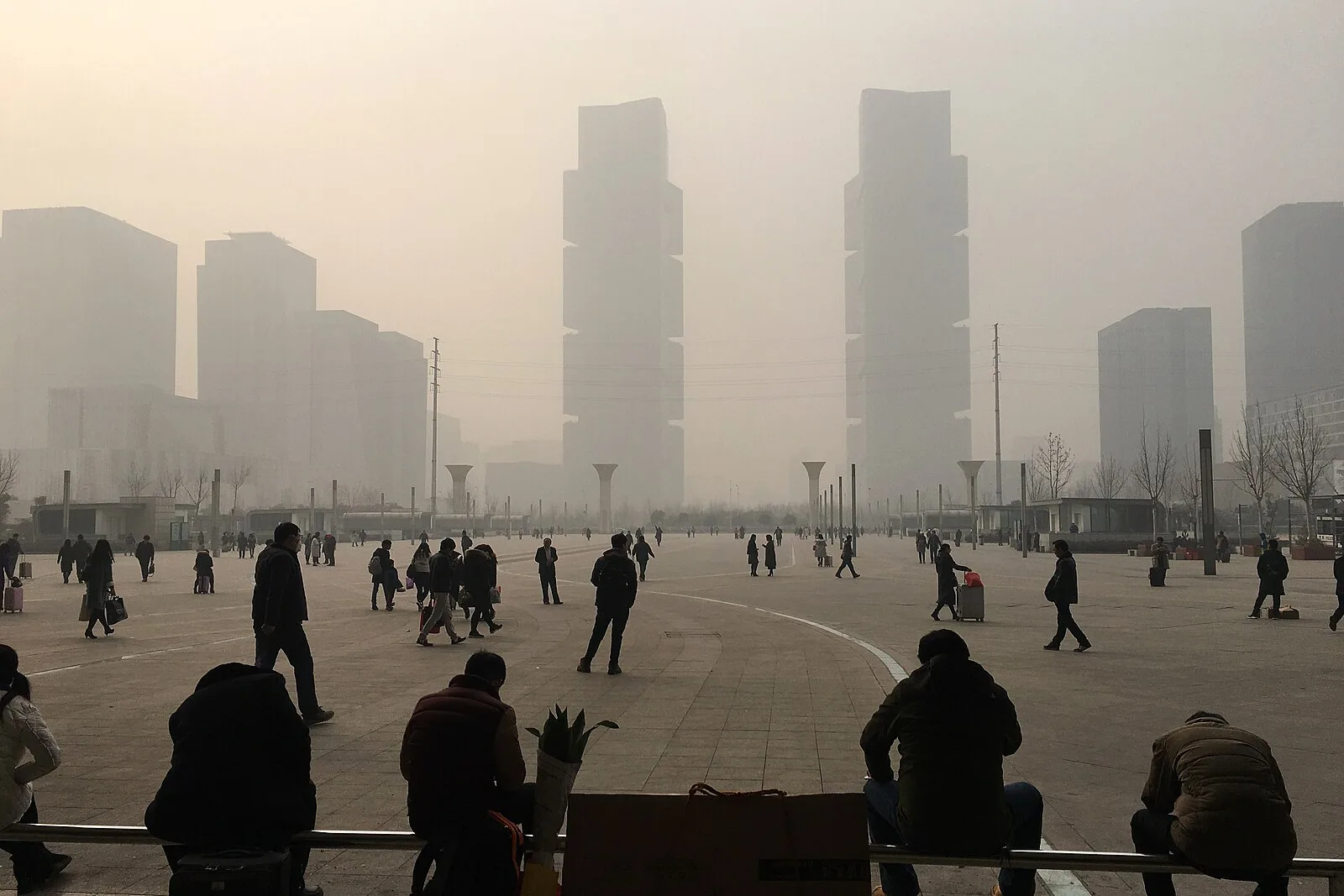
Photo: winter haze over a northern Chinese city. Credit: Windmemories (Wikimedia Commons); licence CC BY-SA 4.0; original file page. Resized and converted for this page; the 2017 file photo illustrates the pollution episodes that trigger these alerts and is not from Liaocheng.
Supply is high, so the cut is small
The cluster-wide halt sounds large, but the arithmetic is against a price rally. CUSTEEL’s weekly sample shows national seamless pipe output at 422,900 tonnes for the week, up 13,600 tonnes week on week, with capacity utilisation at 84.81 percent and mill-side inventory at 925,800 tonnes, still 17,300 tonnes higher month on month; the 33-city average price for 20# 108×4.5 mm seamless pipe slipped 9 yuan to 4,190 yuan per tonne (CUSTEEL, 2 November). Mysteel’s November outlook reads the same way: output sits at a relatively high level, mill stocks have turned up again, and the industry lacks the basis for a trend rally (Mysteel monthly).
Lange’s national reading on 2 November put the key-city average at 4,200 yuan per tonne with Shandong’s 21 tracked mills shipping 17,800 tonnes on the day, down from Friday (Lange). The macro backdrop is no help either: the National Bureau of Statistics reported October manufacturing PMI at 49.3 percent, down 0.8 points, with new orders at 49.4 (NBS). Mysteel’s conclusion is that prices will keep drifting lower in November unless mill output falls below 400,000 tonnes a week, which would meaningfully relieve inventory pressure (Mysteel monthly).
Demand: construction slows, exports cushion
November marks the start of the northern construction off-season, and Mysteel expects construction-tube demand to fall seasonally while manufacturing and exports provide only a partial offset (Mysteel monthly). The export channel is doing real work: September seamless pipe exports reached 572,500 tonnes, up 6.61 percent month on month, and January-September exports total 4.539 million tonnes, up 0.78 percent year on year (Mysteel monthly). Lange’s Shandong transaction survey confirms the soft tape: daily shipments at the 21 tracked mills averaged 17,900 tonnes last week, down 900 tonnes (Lange).
For buyers of structural and mechanical seamless pipe, the practical picture is a two-track market: commodity fluid and structural sizes stay heavy and negotiable, while special-order grades keep firmer lead times. Our background primer on where seamless pipe prices stand in 2026 explains how to read these mill-level moves.
What buyers should watch
Three markers decide whether the curtailment matters beyond sentiment: when Liaocheng lifts the alert (no date announced), whether national weekly output actually falls below 400,000 tonnes, and whether Shandong billet prices keep sliding and reopen the cost cushion. Until then, expect ex-mill quotes to hold steady with wider real-world discounts, and schedule shipments against confirmed rolling schedules rather than list prices. If you buy against project timelines, our team can help you plan around Shandong supply windows — see contact for a quote.
Sources
- 生态环境部发布11月上半月全国空气质量预报会商结果(Ministry of Ecology and Environment, 2026-10-31)
- 2026年10月中国采购经理指数运行情况(National Bureau of Statistics, 2026-10-31)
- 兰格无缝管日盘点:聊城限产扰动供给(Lange Steel, 2026-11-02, via Sina Finance)
- 兰格管坯日盘点:需求边际走弱 限产扰动有限(Lange Steel, 2026-11-02, via Sina Finance)
- 11.2中联钢联合钢铁网日报(CUSTEEL, 2026-11-02)
- Mysteel月报:11月全国无缝管价格或延续窄幅趋弱调整(Mysteel, 2026-11-02)
- 山东省汶上县生态环境局关于发布环境空气污染预警信息的紧急通知(via in-en.com, 2026-11-02)
- 山东滨州启动重污染天气Ⅱ级应急响应(The Paper / 澎湃新闻, 2026-11-02)
- 济源11月6日0时启动重污染天气橙色预警(Mysteel, 2026-11-04)