API 5L X42 vs X52 vs X60 vs X70: Grade-by-Grade Comparison
The “X” grades of API 5L line pipe — X42, X52, X60 and X70 — are the backbone of most oil and gas transmission pipelines. The number after the “X” is the minimum yield strength in thousands of pounds per square inch (ksi): X42 means a minimum yield strength of 42 ksi, X70 means 70 ksi.
Understanding the differences between these grades helps you buy the right pipe the first time — neither over-specified (paying too much) nor under-specified (risking failure).
Grade Designation Explained
| Grade | Min Yield Strength | Min Tensile Strength | Yield/Tensile Ratio (max) |
|---|---|---|---|
| X42 | 290 MPa (42 ksi) | 415 MPa (60 ksi) | 0.93 |
| X52 | 360 MPa (52 ksi) | 460 MPa (66.7 ksi) | 0.93 |
| X60 | 415 MPa (60 ksi) | 520 MPa (75.4 ksi) | 0.93 |
| X70 | 485 MPa (70 ksi) | 570 MPa (82.7 ksi) | 0.93 |
Higher grades deliver more strength per millimeter of wall thickness, which means lighter pipes and lower steel consumption for the same design pressure. But they cost more per ton and demand stricter process control from the mill.
Chemical Composition and Microalloying
The X grades are microalloyed steels. Small additions of vanadium (V), niobium (Nb) and titanium (Ti) refine the grain structure and boost strength without relying on high carbon content.
| Grade | C (max) | Mn (max) | P (max) | S (max) | V, Nb, Ti |
|---|---|---|---|---|---|
| X42 | 0.28% | 1.30% | 0.030% | 0.030% | As agreed |
| X52 | 0.28% | 1.40% | 0.030% | 0.030% | As agreed |
| X60 | 0.28% | 1.40% | 0.030% | 0.030% | As agreed |
| X70 | 0.28% | 1.50% | 0.030% | 0.030% | As agreed |
Lower carbon content is the key reason higher grades remain weldable. If carbon were simply raised to gain strength, the pipe would become hard and brittle at the weld zone. Microalloying achieves strength with weldability intact — this is why X70, not a “thicker X42”, is used for large-diameter, high-pressure gas lines.
Toughness and Sour Service
Higher grades generally require better fracture toughness, which is why API 5L PSL2 adds Charpy V-notch impact testing for most grades. Typical minimums at 0 °C range from 27 J to 40 J depending on grade and specification level.
For sour service (wet H₂S), the picture is different. High-strength grades are more susceptible to sulfide stress cracking. When the gas contains H₂S, specify NACE MR0175 / ISO 15156 and confirm the grade — many sour-service projects deliberately stay below X60 or use specially processed material.
Weldability
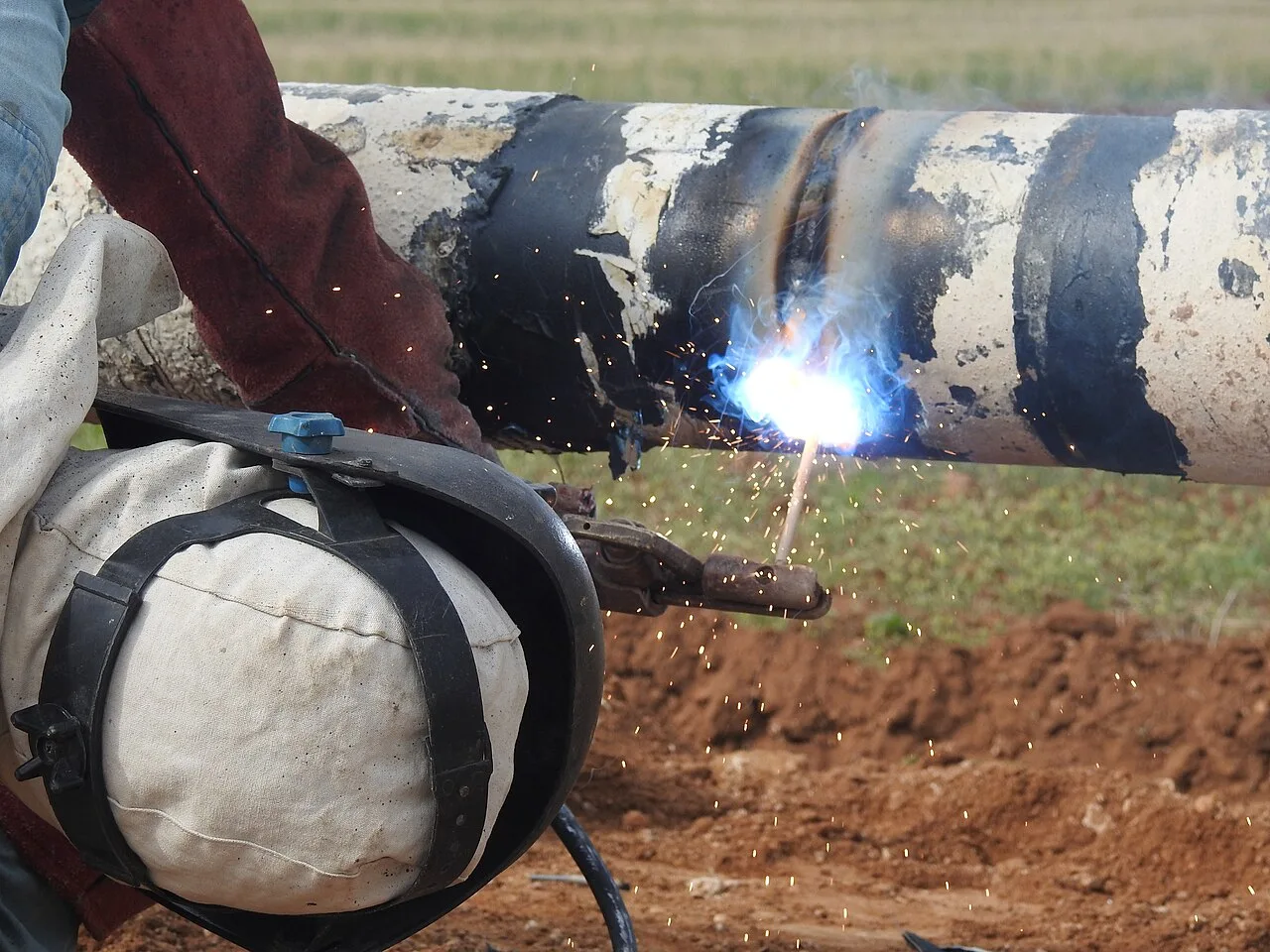
All four grades are designed to be field-welded. The practical difference is in the welding procedure:
- X42 and X52 use conventional cellulosic or low-hydrogen electrodes with straightforward preheat requirements.
- X60 and X70 need stricter heat input control, hydrogen control and often controlled cooling to maintain toughness in the heat-affected zone.
For long cross-country pipelines, welding productivity and consistency matter, and X70 is now the workhorse grade for modern high-pressure transmission lines worldwide.
Cost and Availability
As a rule of thumb, each step up in grade adds cost. A typical ranking from cheapest to most expensive is X42 < X52 < X60 < X70, driven by alloy additions and stricter processing.
X52 is the most widely stocked export grade because it balances strength, weldability and cost for medium-pressure lines. X60 and X70 are common for main transmission lines but often need to be made to order, especially in seamless form above 12“ OD.
How to Choose the Right Grade
Selecting the grade is an engineering decision based on:
- Design pressure and diameter — higher pressure × larger diameter = higher grade
- Wall thickness economy — a higher grade lets you reduce wall thickness and total tonnage
- Toughness requirements — cold regions and offshore demand higher toughness (often X65/X70 PSL2)
- Sour service — H₂S in the stream can restrict the maximum grade
- Field welding capability — make sure the contractor’s procedures cover the grade
- Budget and lead time — stocked grades ship faster
Bottom Line
There is no universal “best” grade. X42 and X52 cover most medium-pressure and general oil/gas service, X60 fits higher-pressure transmission, and X70 is the standard for large-diameter long-distance gas pipelines. When in doubt, provide your design pressure, temperature and fluid composition — we will recommend the most economical grade that meets the specification.
Need API 5L seamless line pipe from X42 to X70? Send our engineers your project parameters and we will confirm grade, wall thickness, PSL level and pricing within 24 hours.